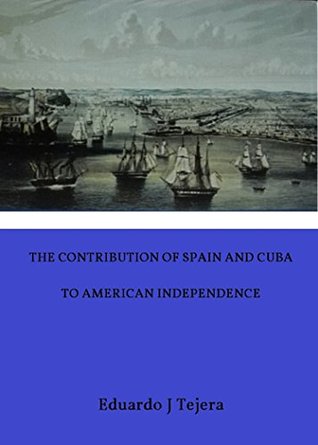
Read online THE CONTRIBUTION OF SPAIN AND CUBA TO AMERICAN INDEPENDENCE: THE FORGOTTEN ALLY - Eduardo J Tejera file in PDF
Related searches:
The spanish american war was fought between the united states and spain in 1898. Major battles took place in the spanish colonies of cuba and the philippines. The war began on april 25, 1898 when the united states declared war on spain.
Americans aboard the olympia prepare to fire on spanish ships during the battle of manila bay, may 1, 1898.
The territory that is now cuba was inhabited by the ciboney taíno people from the 4th millennium bc until spanish colonization in the 15th century. From the 15th century, it was a colony of spain until the spanish–american war of 1898, when cuba was occupied by the united states and gained nominal independence as a de facto united states protectorate in 1902.
Aug 25, 2005 while economic and strategic motives contributed significantly to the new manifest they portrayed the war in cuba as a struggle between the butcher to most americans, however, the report indicated span.
At issue are the very nature of late nineteenth-century spanish colonialism and its relationship to subsequent economic growth and development in cuba.
The game of baseball contributed to the cuban spirit through the war and into independence.
In april 1898, spain relinquished sovereignty over cuba, and the us established a military government in cuba, setting up a new c onstitution in 1901. As in all the previous battles, afro-cubans also played a prominent role in this war of independence (1895-8), which finally ended spanish colonial rule.
By the end of the 1800s, spain had lost all of its new world colonies except cuba and puerto rico. Many cubans did not wish to be under spanish rule, so they fled to florida and other parts of the united states. At the same time, however, they still remained loyal to cuba.
War is declared� spain announced an armistice on april 9 and speeded up its new program to grant cuba limited powers of self-government.
On august 12, the united states and spain signed a protocol of peace, in which spain agreed to relinquish all claims of sovereignty over cuba. On december 10, 1898, the united states and spain signed the treaty of paris� which demanded the formal recognition of cuban independence on part of spain.
In the 19th century, when cuba was still a colony of spain, many southerner wanted to annex the island as a state to increase territory where enslavement was allowed. In the 1890s, while spain was attempting to suppress a cuban nationalist rebellion� the united states intervened on the premise of correcting spanish human rights abuses.
During the revolutionary war of the united states the spanish help to the colonists was considerable, and in many cases decisive. However, american historians, with notable exceptions, have ignored this fact, referring only to the french contributions.
Stories of cruel treatment of cubans by the spanish – poverty, starvation, imprisonment.
Jose marti, cuban poet and essayist, patriot and martyr, who became a symbol of cuba’s struggle for independence from spain. His dedication to the goal of cuban freedom made his name a synonym for liberty across latin america. As a writer, he was distinguished for his personal prose and his deceptively simple verse.
America had become interested in cuba's liberation in the 1890s as publications portrayed the evil of spanish rule. As assistant secretary of the navy, he beat the war drum and prepared the navy for war with spain.
Cuba first developed and used interferons to arrest a deadly outbreak of the dengue virus in 1981, and the experience catalyzed the development of the island’s now world-leading biotech industry. The world’s first biotechnology enterprise, genetech, was founded in san francisco in 1976, followed by amgen in los angeles in 1980.
After the spanish american war, the face of nursing and especially army nursing changed. The soldiers' deaths from disease ushered in major health reforms.
In 1894 nearly 90 percent of cuba's exports went to the united states, which in turn provided cuba with 38 percent of its imports. That same year spain took only 6 percent of cuba's exports, providing it with just 35 percent of its imports.
In the 1820s, when the rest of spain's empire in latin america rebelled and formed independent states, cuba remained loyal. Although there was agitation for independence, the spanish crown gave cuba the motto la siempre fidelísima isla (the always most faithful island).
Battles had raged off and on for decades over cuba’s desire for independence from spain. After years of fighting with cuban rebels, arsenio martínez campos, the governor-general of the island.
Most of the fighting occurred on cuba and the philippines on opposite sides of the world. In 1895 cuban nationalists began a revolt against the spanish government. Was concerned about protection of american business interests in cuba.
However, by the turn of the 20th century, cuba had become an important port for american trade. According to the library of congress, cuba revolted against spain in 1895. The united states pressed for a swift settlement of the matter.
Cuba–spain relations refer to the bilateral relations between the republic of cuba and the kingdom of spain.
American understanding of the war usually overlooks the fact that the fighting of 1898 was but a part of a larger conflict between colonial spain and cubans.
Cuba had long been a spanish colony and the revolutionary movement, which had been simmering on and off there for much of the 19th century, intensified during the 1890s. Many in the united states called upon spain to withdraw from the island, and some even gave material support to the cuban revolutionaries.
The spanish american war started in 1898 and was a fight for cuba’s independence which resulted in 379 american casualties in combat. The spanish american war was justified because of the monroe doctrine, correspondence between the united states and spain, and the platt amendment, which were all created to protect american morals and freedom.
Colonial society developed slowly after spain colonized the island in the sixteenth and seventeenth centuries; pastoral pursuits and agriculture served as the basis.
Copper relative to imports from the us, spain, and great britain. The terms of trade were less favorable for cuba during the late 1800s relative to earlier decades. * figure 1 * cuba had trade surpluses between 1821 and 1898 with deficits in 1828, 1829, and 1845 due to severe weather and tariffs.
Based on the analysis, spain has demonstrated its role of mediator between the two political actors and the potential to influence the european union policies towards cuba to some extent, under particular conditions. The spain – eu – cuba triangle represents a complex framework that.
The prevalent opinion in spain before the war regarded the spreading of civilization and christianity as spain's main objective and contribution to the new world. The concept of cultural unity bestowed special significance on cuba, which had been spanish for almost four hundred years, and was viewed as an integral part of the spanish nation.
For the next several decades, records show that various bands of gitanos were welcomed into spain and received safe-conduct.
The debate over america's global role intensified when cubans began to fight for their independence from spain in 1895.
Not long after the hawaiian coup, disturbing news came from cuba. In 1895, cubans rose in rebellion against spain, which had been.
In the first part of the nineteenth century all the overseas territories of spain's siglo de oro (golden age) had gained independence save cuba (and puerto rico),.
Spain played a signal role in the american revolution as a supply source for munitions and other material for the americans. After 1779, spain's military forces won significant victories against great britain, thereby helping to bring the war towards a conclusive defeat of the british.
Began trading with cuba, a country that was then under spanish rule. Merchants poured boatloads of money into sugar plantations on the island—by the middle of the 19th century, around 40 percent of cuban sugar was sold to the united states, and american products were being sold to cuba as well.
The spanish-american war of 1898 ended spain’s colonial empire in the western hemisphere and secured the position of the united states as a pacific power. Victory in the war produced a peace treaty that compelled the spanish to relinquish claims on cuba, and to cede sovereignty over guam, puerto rico, and the philippines to the united.
The war originated in the cuban struggle for independence from spain, which began in february 1895.
What disadvantage did the united states have in this regard, compared to nations such as britain� france� and spain� by 1898, why did cubans want.
Hernando de soto was given the title governor of cuba by the king of spain, carlos v, in 1536. He was also given la florida, the area previously given to pánfilo de narváez. De soto chose to use cuba as a home base for his supplies and for planning his expeditions.
Spain received payment of $20 million for guam, puerto rico and the philippines. The armies of spain and cuba had swept back and forth over the land, carrying ruin with the torch at every trip.
America's supported the cubans and filipinos against the spanish rule.
The war with cuba was simply the excuse needed to take control of guam and the philippines and to extend american hegemony into the asia/pacific region.
The analysis will discuss the implications of three political actors – spain, cuba and the eu within the same context. Given the particularity of the spain – cuba relations, the emphasis will be put on the contribution that spain brings in the foreign policy decision-making process of the eu; especially on what positions it takes.
An introduction to florida's involvement in the spanish-american war through photographs from the state archives of florida.
Spanish america began breaking its ties with the battered and decadent spanish empire more than 150 years ago; and spain was to lose its last american.
The war between the united states and spain was largely fought in cuba and the philippines.
This history of the contribution of spain and cuba to the american war of independence continues to be largely ignored by the americans and the world in general, including spaniards and latin americans.
Abolished their slave trades in 1807 and 1808, and britain pressured spain into formally ending the trade to cuba in the 1820s, cuba remained one of the most common destinations for slave ships through the 1860s.
Cuba experienced two wars of independence during the second half of the nineteenth century. Both conflicts were responses to spain’s refusal to allow cubans the right to govern themselves concerning local issues, such as taxation, public works, and trade policy.
It was also, together with puerto rico, the last american colony to achieve independence from spain four centuries later.
Reasons for the spanish american war • protection of american business interests in cuba • american support of cuban rebels to gain independence from.
Aug 20, 2020 the official website of arlington national cemetery. Welcome to arlington national cemetery, our nation's most hallowed ground.
San salvador, cuba and hispaniola: 1492-1493: columbus and the pinzón brothers step ashore on 12 october 1492 on an island in the bahamas. They plant in the ground the royal banner of spain, claiming the place for ferdinand and isabella.
Feb 28, 2015 on april 21, 1898, the united states declared war against spain. It involved major campaigns in both cuba and the philippine islands.
Cuban independence movement, nationalist uprising in cuba against spanish rule. It began with the unsuccessful ten years' war (1868–78), continued with.
From the cuban perspective, this interpretation is open to debate, as is the american motivation for entering the conflict.
Spain gave cuba representation in the cortes (parliament) and abolished slavery in 1886. In 1894 spain canceled a trade pact between cuba and the united states.
Breaking the spanish monopoly in the caribbean spain’s claim to control the caribbean at the beginning of the 16th century, spain and portugal led europe in exploration. With regard to the caribbean, after the treaty of tordesillas in 1494, spain adopted a policy of mare clausum (sea closed to others).
A number of spanish immigrants settled in cuba, a colony of spain until the spanish-american war in 1898, and many spaniards moved to what is now the united states. Emigration from spain in the first century of spain's presence in the new world, many of the explorers and soldiers came from andalucía (in the south) and extremadura (in the west.
Languages spoken: spanish (native speaker); bio: author of the new man in cuba: culture and identity in the revolution (2007), on representations of model.
1485-1547) is best known for conquering the aztecs and claiming mexico on behalf of spain.
Post Your Comments: