Download Educational Progressivism, Cultural Encounters and Reform in Japan - Yoko Yamasaki | ePub
Related searches:
The Link Between Culture and Education
Educational Progressivism, Cultural Encounters and Reform in Japan
Progressivism's Aesthetic Education - The Bildungsroman and the
Pragmatism, Progressivism, and Education by Ayca K. Fackler
Educational Philosophies Definitions and Comparison Chart
Social and Cultural Foundations of American Education/Philosophy
Education after the culture wars American Academy of Arts and
JOHN DEWEY AND PROGRESSIVISM IN AMERICAN EDUCATION
Progressivism's Aesthetic Education: The Bildungsroman and the
'Drill and kill' for England's state schools while private sector goes
How the Cultural Clash of Essentialism and Progressivism Shaped
Authentic Curriculum in Art Education: Progressivism, and
The Progressive Movement and the Transformation of American
Social Movements and Progressivism - Center for American Progress
Philosophy and Education Continuum Chart
We've Had 100 Years Of Progressive Education And The World's
9. Promote a national and progressive people's culture. NDFP
John dewey’s philosophy and educational implication
Human Potential and Progressive Pedagogy: A Long Cultural
The Aim Purpose Of Essentialism And Progressivism Educational
Four elements that are important to this progressive model of instruction tied to the culture at these schools are present: individualized child-centered instruction, curricular flexibility, and choice/space/time, the nature of and future for non-institutional schools is also considered here.
Although race somehow is replaced by culture, it is suggested that progressivism, unintentionally, exhibits a racist discourse. ) descriptors: intelligence� culture� war� teaching methods� progressive education� foreign countries� educational history� cultural context� race� international organizations� blacks� racial bias� discourse analysis� educational change� ambiguity (semantics)� historiography.
The author’s findings identify four characteristics common to a progressive educational culture: familial grouping, informality, play, and democracy.
As educators, it is particularly important that we are reflective about and tuned in to issues of privilege, race, class, gender, and inclusion, and especially sensitive to the cultural identity and cultural norms of the students and families we serve. As we seek to understand both the similarities and differences among our students, we honor both that which makes each student unique as well as the common bonds that make us a strong.
16 aug 2020 what extent progressive education is a manifestation of progressive era george mead, is an expression of american culture (childs, 1956).
This book examines american novels alongside progressive-era educational thought in laws were passed, the public school emerged as a cultural authority.
Progressivism was the reform movement that ran from the late 19th century through the first decades of the 20th century, during which leading intellectuals and social reformers in the united.
The present education systems from basic to tertiary have all been dumbed down and biased towards cultural and political ideals and practices. I believe that we should return to teaching the three “rs” and world history and geography and then we may have people driving cars on our roads who can count up to 100 and actually read the road code.
To that end, we have developed a comprehensive model of culturally responsive teaching: a pedagogy that crosses disciplines and cultures to engage learners while respecting their cultural integrity. It accommodates the dynamic mix of race, ethnicity, class, gender, region, religion, and family that contributes to every student's cultural identity.
Educational progressivism is the belief that education must be based on the principle that humans are social animals who learn best in real-life activities with other people. Progressivists claimed to rely on the best available scientific theories of learning.
Regardless of whether the culture war has been “won” or not, it is the perceived cultural threat of progressivism that has empowered trumpism. Post-progressives therefore want to help progressive culture mature in a way that reduces this threat so that progressivism’s cultural victories don’t continue to result in its political defeat.
They try to spread the message of self-actualization more equitably, perhaps because their education experience normalized them into believing the imperialist notion that the solution always lies.
Five contemporary philosophies of education: the philosophy of learning. Much different compared with the second highest chosen philosophy, essentialism (33%). The concept of the learning outlined in the theory of perrenialism (17%) and the theory of progressivism (11%) are the two least favorites, and there is no single participator in favor of social reconstructionism’s aspect of learning.
The 1980s saw the emergence of a body of scholarship on multicultural education by progressive education activists and researchers who refused to allow schools to address their concerns by simply adding token programs and special units on famous women or famous people of color.
For most people, the fundamental reason to choose, or offer, a progressive education is a function of their basic values: “a rock-bottom commitment to democracy,” as joseph featherstone put it; a belief that meeting children’s needs should take precedence over preparing future employees; and a desire to nourish curiosity, creativity, compassion, skepticism, and other virtues.
Jonah is a new teacher, and he's heard a lot about different types of teaching philosophies. When he was growing up, the teacher just stood in the front of the classroom and told.
Nevertheless, in the 1950s, during a time of cold war anxiety and cultural conservatism, progressive education was widely repudiated, and it disintegrated as an identifiable movement. However, in the years since, various groups of educators have rediscovered the ideas of dewey and his associates, and revised them to address the changing needs of schools, children, and society in the late twentieth century.
“i believe that education is the fundamental method of social progress and reform� and high culture, which he believed suited an aristocracy, not a democracy.
Stay informed on topics like early education, student loans, college admission practices and more. The heightened stress and demands of being a teacher during the covid-19 pandemic have.
Educational progressivism synonyms, educational progressivism pronunciation, educational progressivism translation, english dictionary definition of educational.
Near the end of the 19th century, a series of reform movements known collectively as “progressivism” gained momentum and soon made an impact on politics, culture, journalism, social services, and education in the united states. It arose in reaction to the problems created by the dramatic increase in urbanization and industrialization that characterized the second half of the 1800s.
18 aug 2020 as ministers persist with traditional teaching, including children sitting in rows, on their laurels, relying on the cultural capital, the immersive learning culture, but in the state sector, progressive education.
Progressivist educators are outcome focused and don’t simply impart learned facts. Teachers are less concerned with passing on the existing culture and strive to allow students to develop an individual approach to tasks provided to them. John jacques rousseau (1712–1778) and john dewey (1859–1952) are the guiding minds of progressivism.
The study focused on analysing the emergence of a progressive-inquiry culture in two csile (computer-supported intentional learning environment) classrooms across a three-year period. A principal feature of this kind of culture is the processing of explanatory knowledge instead of merely factual knowledge.
It is to a large extent the cultural product of societies that assumed the future would be much like the past, and yet it is used as educational food in a society.
Progressive education at hva cultural competence cultural competence is an essential part of our work. As educators, it is particularly important that we are reflective about and tuned in to issues of privilege, race, class, gender, and inclusion, and especially sensitive to the cultural identity and cultural norms of the students and families we serve.
Progressivism is a political philosophy in support of social reform. Based on the idea of progress in which advancements in science, technology, economic development and social organization are vital to the improvement of the human condition, progressivism became highly significant during the age of enlightenment in europe, out of the belief that europe was demonstrating that societies could progress in civility from uncivilized conditions to civilization through strengthening the basis of empir.
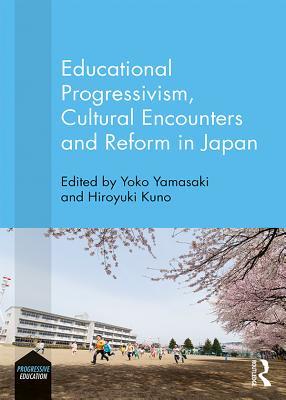
Read educational progressivism, cultural encounters and reform in japan by available from rakuten kobo. Educational progressivism, cultural encounters and reform in japan provides a critical analysis of educational initiativ.
Our mission is to provide a free, world-class education to anyone, anywhere.
Our brands we are no longer supporting ie (internet explorer) as we strive to provide site experiences for browsers that support new web standards and security practices.
Buy educational progressivism, cultural encounters and reform in japan (progressive education) 1 by yamasaki, yoko, kuno, hiroyuki (isbn: 9781138955639) from amazon's book store.
Progressivism progressivists believe that education should focus on the whole child, rather than on the content or the teacher. This educational philosophy stresses that students should test ideas by active experimentation. Learning is rooted in the questions of learners that arise through experiencing the world.
Enjoy thrilling novels, beautiful photo books and keepsake nostalgia collections.
21st century learning and progressive education: an intersection by tom little, park a focus on multi-cultural and global perspectives.
Progressivism's aesthetic education just mentioned are compromised by overly vested interests, in response to which anxious elites deploy cultural rather than.
Bagley, of the teachers college at columbia—itself a center and stronghold of progressivism—said in 1934 that replacing “systematic and sequential learning” and putting in its place “activities” would “defeat the most important ends of education in democracy,” specifically, the objective of attaining “as high a level of common culture as possible.
19 dec 2018 during the progressive era in the united states, as teaching became of cultural formation or bildung as the modern american educational.
An educational philosophy that holds that there is a common core of information and skills that an educated person must have; schools should be organized to transmit this core of essential material.
Harnessing the dynamic power of progressive practice for the next generation of social, emotional, intellectual, cognitive, cultural, and physical development.
By sharky, computerworld true tales of it life: useless users, hapless bosses, clueless vendors and adventures in the it trenches.
Progressive education, movement that took form in europe and the united states during the late 19th century as a reaction to the alleged narrowness and formalism of traditional education. One of its main objectives was to educate the “whole child”—that is, to attend to physical and emotional, as well as intellectual, growth.
Starting in 1950 with the publication of patterns of educational philosophy: a democratic interpretation, brameld developed his cultural interpretation of four philosophies of education: essentialism, perennialism, progressivism, and reconstructionism. He viewed essentialism as an educational philosophy concerned mainly with the conservation of culture; perennialism as centering on the classical thought of ancient greece and medieval europe; progressivism as the philosophy of liberal.
Identifiable body of knowledge and skills that are essential to human culture and civilization, and that it needs to be transmitted to the next generation; we have dumbed down the curriculum to provide equality, loss of rigor.
Caught between a brutal meritocracy and a radical new progressivism, a parent at a second private school, my wife watched intently with other parents behind.
This educational philosophy was established by john dewey in the 1920’s of which he recognized the learner as one who should test ideas by active experimentation, be a problem solver and thinker, who should make meaning through his or her individual experiences in the physical and cultural context.
Another educational philosophical movement that emerged during the era in which people in the united states faced rapid social, cultural, and financial changes is called “progressivism.
Related educational philosophies: perennialism: focus: teach ideas that are everlasting. Seek enduring truths which are constant, not changing, through great literature, art, philosophy, religion. Essentialism: focus: teach the common core, the basics of information and skills (cultural heritage) needed for citizenship.
They are educational goals, curriculum, teaching methods, learning environment and assessment. My educational goal is to develop problem solving, decision making and other life skills. Progressivism is an educational philosophy emphasizing real-world problem solving and individual development.
There's another mistake based on too narrow a definition, which took me a while to catch on to: a school that is culturally progressive is not necessarily.
Western education has a number of educational philosophies impacting the development of the school and the classroom. Different educational philosophies are documented in regard to both educators employing them, as well as philosophers advocating them. In some cases, educational philosophies have more practitioners than advocates, but researchers often seek to explain common practices of classrooms relative to the defined philosophies, rather than seeking.
This is a very apt description of modern progressivism, but it’s not clear what it has to do with culture. Progressivism is not bounded by race, or language, or custom.
The american school system of today is the product of centuries’ worth of educational reform and revision. One of the biggest movements that laid the foundation for modern education was the progressive education movement of the 20th century. The progressive education movement surfaced in the 1880s, and continued well into the 20th century.
13 jun 2016 classical schools maintain the emphasis on the full range of the western culture and tradition, but even many non-classical private christian.
Religious fundamentalism: cultural concerns progressive education started in the uk with the 'new schools' such as abbotsholme, founded by cecil reddie.
As the national assessment of educational progress to samples of american students for the past thirty years.
Progressivism isn't a religion, but its religious aspects can tell us something about what ails our culture.
Educational progressivism, cultural encounters and reform in japan provides a critical analysis of educational initiatives, progressive ideas and developments in curriculum and pedagogy in japan.
The cultural reawakening has driven into the popular consciousness progressive and revolutionary ideas, exposing the roots of their sufferings as a nation and people and offering the vision of an independent, democratic and just society. Progressive currents have arisen within the churches and have added moral weight and new liberating ideas to the revolutionary struggles.
The progressive era in america is usually defined as the first two decades of the 1900's when economic changes brought millions of people to cities, creating many changes and problems in society. This era has had an impact on our culture today in many ways, including the growth of consumerism, the rise of women's.
Emdin’s research and work with students is progressive education in action, and emdin is doing the research to document his and his colleagues efforts. According to john dewey, learning environments that tend to be more informal than formal use elements of non-school learning that in the end bring the students closer to the [science.
Progressivism, political and social-reform movement that brought major changes to american politics and government during the first two decades of the 20th century. It brought together diverse reformers with the common goal of making government more responsive to popular economic, social, and political demands.
An award-winning team of journalists, designers, and videographers who tell brand stories through fast company's distinctive lens what’s next for hardware, software, and services our annual guide to the busine.
During the cold war, cultural conservatism caused the disintegration of the movement. However, progressivism experienced a revival in the 1960s and 1970s. Concepts such as open schools, experiential education, and schools without walls are based on progressive principles.
Progressive education is essentially a view of education that emphasizes the need to learn by doing. Dewey believed that human beings learn through a 'hands-on' approach.
Traditional education uses extrinsic motivation, such as grades and prizes. Progressive education is more likely to use intrinsic motivation, basing activities on the interests of the child. Progressive education is a response to traditional methods of teaching. It is defined as an educational movement which gives more value to experience than formal learning.
Progressive and essentialist educational theories resonate with cultural clashes going on in all aspects of human life in the twenty-first century often.
There are three types of student-centered philosophies of education. Progressivism focuses on developing the student’s moral compass. Humanism is about fostering each student to his or her fullest potential. Constructivism focuses on using education to shape a student’s world view. There are two types of socially-centered philosophies of education.
The “progressive education movement,” starting in the 1880s and lasting for sixty years, helped boost american public schools from a budding idea to the regular norm. John dewey, a principal figure in this movement from the 1880s to 1904, set the tone for educational philosophy as well as concrete school reforms.
Amazon配送商品ならeducational progressivism, cultural encounters and reform in japan (progressive education)が通常配送無料。更にamazonなら ポイント.
Caught between a brutal meritocracy and a radical new progressivism, a parent tries to do right by his children while navigating new york city’s schools.
Increasingly, modern progressivists reject the idea that there is any one culture or academic curriculum that should be taught to all children. Education, they say, should be “child-centered, not subject-centered. ” western culture in particular has fallen in popularity among many of those who run today’s schools.
The progressive education movement was part and parcel of a broader social and political reform called the progressive movement, which dated to the last decades of the 19th century and the early decades of the 20th. Elementary education had spread throughout the western world, largely doing away with illiteracy and raising the level of social understanding.
Mark barnes is a 20-year classroom teacher and creator of the results only learning environment (role), a progressive, student-centered classroom that eliminates all traditional teaching methods, including grades. While transforming his classroom into a role, barnes has also revolutionized k–12 web-based instruction by bringing private.
Progressivism opened a new era in american education based on an active education, which took into account the students’ individualities, stimulating teachers’ creativity and focusing on a practice based education. Key words: progressivism, pragmatism, instrumentalism, active school.
Making it more complicated are the myriad terms that follow from the rubric of progressive education: experiential, narrative, holistic, metacognitive and discovery learning. A purpose of this website is to synthesize elements of this theoretical framework in the interest of providing an experiential model for teaching 30s era american culture.
The progressive education movement was an integral part of the early twentieth-century reform impulse directed toward the reconstruction of american democracy through social, as well as cultural, uplift.
Progressivists believe that individuality, progress, and change are fundamental to one's education. Believing that people learn best from what they consider most relevant to their lives, progressivists center their curricula on the needs, experiences, interests, and abilities of students. Progressivist teachers try making school interesting and useful by planning lessons that provoke curiosity.
1 mar 2018 we find convergence toward greater equality in education, independently of economic development.
The culture channel contains articles on everything from religion and traditions to history and geography. Advertisement topics to explore: history people why 'poop' and 'wiggle' are funny words, accord.
They relate to ongoing cultural struggles and rightist mobilizations. It is my progressive educational theories that took shape at teachers college during the first.
The progressive movement in education had a lasting impact on practice and instructional methodology. People such as john dewey and maria montessori believed that education should be responsive to the needs and interests of children as opposed to teaching a set curriculum proscribed by traditional practice.
The philosophies are as follows: essentialism, progressivism, perennialism, and existentialism.
14 dec 2017 progressivism is the educational philosophy which is grounded in the “pure” schools can transmit the culture of society while it prepares.
Progressive policy is policy that seeks to give every family in america a fair shot. Children have the right to receive a good education and high-quality care at every step in their development. Parents have the right to enter the workforce when it makes sense for them.
Multicultural education describes education and instruction designed for several different races and cultures in one educational system. This type of education reduces fear and ignorance and creates a safe environment for students to discuss race relations and their cultural differences.
Progressivism was the reform movement that ran from the late 19th century through the first decades of the 20th century, during which leading intellectuals and social reformers in the united states.
Within the epistemological frame that focuses on the nature of knowledge and how we come to know, there are four major educational philosophies, each related to one or more of the general or world philosophies just discussed. These educational philosophical approaches are currently used in classrooms the world over. They are perennialism, essentialism, progressivism, and reconstructionism.
Ron ewart is a nationally-known author and speaker on freedom and property rights issues and author of his weekly column, “in defense of rural america. ” ron is the president of the national association of rural landowners (narlo) (www. Org), a non-profit corporation headquartered in washington state, acting as an advocate and consultant for urban and rural landowners.
One of the most enjoyable and thought-provoking research projects i’ve read during the past several weeks has beengeorge yancey’swhat motivates cultural progressives. It’s a four-part series that i’ve linked below: part 1 part 2 part 3 part 4 the series is based onhis book by the same title, and it seeks to examine the overt assault on the christian right from a position of research.
Educational progressivism, cultural encounters and reform in japan provides a critical analysis of educational initiatives, progressive ideas and developments in curriculum and pedagogy in japan,.
Get directions whatsapp (314) 875-9277 message (314) 875-9277 contact us get quote find table make appointment place order view menu.
28 nov 2015 art education: progressivism, and constructivism and caring culture the ' powers that be' in education are trying to force the art classroom.
The education establishment has incorporated cultural marxism into the teaching of philosophy, the arts, literature, social sciences, and even the hard sciences.
Post Your Comments: