Read Risk management in the cultural heritage sector: Museums, libraries and archives - Salvatore Lorusso file in PDF
Related searches:
Risk management in the cultural heritage sector - Amazon.it
Risk management in the cultural heritage sector: Museums, libraries and archives
Risk Management and Cultural Heritage - e-conservation.org
A Guide to Risk Management of Cultural Heritage
Risk Assessment Approaches for the Reopening of Cultural and
Conflict, Heritage and Risk Management Heritage for Peace
Risk management for collections Publication Cultural Heritage
CULTURAL HERITAGE AND RISK ASSESSMENT: A EUROPEAN
Disaster risk management of cultural heritage through community
UNESCO Chair Programme on Cultural Heritage and Risk
Guatemala Study on Disaster Risk Management of Cultural Heritage
Environmental risk assessment and mitigation on Cultural Heritage
Risk Management In Mid-Sized and Small Museums - Cultural
Cultural risk and management strategy for Chinese enterprises
(PDF) RISK MANAGEMENT STRATEGY FOR CULTURAL HERITAGE
The Link Between Culture and Education
MA in Cultural Management Johns Hopkins University
Establishing cultural influences on risk management
Reputation and Cultural Risk in Your Organization Deloitte US
Managing Risk with a Cultural Perspective – Risk Management
The A-B-C of risk culture - Project Management Institute
Safety Culture and Risk Management in Organizations - Nick F
Strengthening the Risk Management Culture
The Importance of Risk Culture to Your Risk Management
Enterprise Risk Management and Risk Culture Risk McKinsey
Amazon.com: Cultural Calamity: Culture Driven Risk Management
Corporate Culture Risk and the Board
Avalanche risk management - intangible heritage - Culture
Safety culture and risk management in organizations. - APA PsycNET
Cultural influences on risks and risk management: six case studies$
Public Disclosure Authorized Disaster Risk Management in the
Creating cultures of safety: Risk management challenges and
The impact of culture upon operational risk management
A risk challenge culture IMA - The association of accountants and
Cultural Theory and Risk - Routledge Handbooks Online
(PDF) Steps in the Process of Risk Management in Healthcare
Hofstede’s Cultural Framework – Principles of Management
Risk Management Culture: The Linkage Between Ethics
Risk Management: The Case of Aspen Music Festival and School
(PDF) Cultural Approach to Crisis Management
Foundations of Risk Management - Principles and Culture
Management of Risk - Principles and Concepts
Cross-Culture Management Definition Bizfluent
The Importance of Risk Culture Corporate Compliance Insights
Company culture needs a risk management approach — Quartz at
Cultivating a Risk Aware Culture Risk Management Studio
CULTURAL RISK ASSESSMENT IN CONSTRUCTION PROJECTS
Company culture needs a risk management approach — Quartz at Work
risk management culture - Fusion Risk Management
Risk Management Culture Survey_V2.pdf - RISK MANAGEMENT
Risk Assessment - The award winning solution
Risk Management - Join 19 Million Learners Today
Rules for risk management: culture, behaviour and - ACCA Global
LGBTI-inclusive risk management: providing cultural safety
The Relationship Between Organizational Culture, Risk
Risk Characterization for Preserving Cultural - CHNT Vienna
Strengthening institutional risk and integrity culture McKinsey
Project Risk Management: a cultural approach Luiss Business School
(PDF) The Effects of Risk Culture on Organizational
Fusion Culture - Fusion Risk Management
Risk Management - Free Online Courses By Alison©
Social, Cultural & Environmental Risks in Business - Video
Mckinsey’s risk culture diagnostic helps measure risk culture and identify these causes, which can then be addressed with tangible initiatives. The diagnostic uses a framework of attitudes and behaviors based upon a rigorously tested methodology. Actively shaping the risk culture will mitigate future risks and improve overall performance.
Risk culture are elements of risk management that can't be controlled directly because they are embedded in the culture of an organization. Cultures emerge with the shared experiences of a group and are shaped by leadership, communication, policy, procedure and process.
Guatemala study on disaster risk management of cultural heritage.
This report looks at how accountants in a wide range of roles contribute to managing risk as part of their normal work.
If you are involved with a mid-sized or small museum, risk management likely doesn't occupy a lot of your time.
For implementation in fragile and conflict areas, and the technical note on disaster risk management reviews the role of culture, cultural heritage, and the cure principles in the context of the disaster risk management (drm) discipline. The technical notes are meant to be used concomitantly by practitioners working in post-crisis settings.
S lowly, global cultural and heritage sites are starting to reopen to the public. As part of that reopening process, it is important for those responsible for securing artifacts, visitors, and venues to ensure that their security risk management approach remains viable.
This section covers definitions of the key aspects of risk management and the steps taken by event management in creating a risk management plan. A case study is provided for students to apply the risk management process in an industry example.
The risk management processes i have been exposed to are easy to follow and useful for managing risks. The people in risk management roles are helpful and competent in risk management. The risk management software system is easy to use, helpful and makes managing risk information more efficient.
Risk management is the process of identifying, analyzing and responding to risk factors throughout the life of a project and in the best interests of its objectives. Proper risk management implies control of possible future events and is proactive rather than reactive.
In 2001 treasury produced “management of risk – a strategic overview” which rapidly became known as the orange book. That publication provided a basic introduction to the concepts of risk management that proved very popular as a resource for developing and implementing risk management processes in government organisations.
Environment uncertainty cognition and risk management in cross cultural climate change as a threat to peacewater, cultural diversity, and global.
Management; cultural foreign-aid organizations work with local organizations and people to develop new strategies adapting to a local cultural context, and assist people at risk to understand.
For risk management, a company’s culture can be the lynch pin in good decision making and communication in daily business activities. It can motivate people to respond appropriately to a problem event or issue, but it can also be work to silence employees and defer critical decision making.
In the second place, the cultural influences on risk management, or specifically incident reporting and analysis, are considered.
Poignant with examples of clear warning signs, threat and cover-ups along the way to catastrophe, cultural calamity is a must-read for executives, risk managers and risk management novices to understand how to “navigate the risk hurricane,” by sustaining a risk averse culture that minimizes loss and builds resiliency for the future.
Risk culture is a key element of an organization’s enterprise risk management framework, which encompasses the general awareness, attitudes, and behavior of an organization’s employees toward risk and how risk is managed within the organization.
Safety culture provides a global characterization of some of the common behavioral preconditions to disasters and accidents in high-risk sociotechnical systems,.
In other words, cultural heritage institutions should develop a strategy for the protection of cultural heritage in the event of an armed conflict.
However, these apparent differences in risk preference were associated primarily with cultural differences in the perception of the risk of the financial options rather than with cultural differences in attitude towards perceived risk. In all cultures, an equal proportion (the majority) of respondents was willing to pay more for options.
Hofstede’s third cultural dimension is uncertainty avoidance, the degree to which people in a society are comfortable with risk, uncertainty, and unpredictable situations. People in high uncertainty avoidance societies tend to want to avoid uncertainty and unpredictability.
The main factor is organizational culture and how it impacts on the risk management and performance of the organization.
An organisation’s culture, and by extension its risk culture, is both a source of strength and weakness when it comes to the management of operational risk. An appropriate risk culture will ensure that staff accept the importance of effective operational risk management and behave in a manner consistent with the organisation’s operational.
A project is an undertaking by one or more people to develop and create a service, product or goal. Project management is the process of overseeing, organizing and guiding an entire project from start to finish.
Avalanche risk management has shaped the identity of alpine populations, as every winter they deal with the threat avalanches pose to inhabitants, tourists, means of communication and other vital infrastructure. Since the alps are densely populated, the phenomenon of avalanches is a prime concern and a collective responsibility of the communities.
What might a proactive, risk-management approach to culture look like? consider taking these steps on an ongoing basis but particularly during times of rapid growth, acquisitions, or financial.
Improving and strengthening risk management within your organization is the right thing to do and that cultural foundation can also be instrumental in helping systemically important firms earn “strong” regulatory ratings for operational and compliance risk management.
Many risk management challenges and corresponding strategies are the same as nationwide clinical initiatives in patient safety. The role of the nurse manager in directing patient care and influencing change from a risk perspective is paramount to success.
Moreover, baba considered cross cultural differences from risk management perspective; he recognized that the risk factors associated with international.
Americans, with a low uai score of 46, are considered risk takers, while japan’s high uai score of 89 suggest a culture that is more risk averse. In general, a low score on the uai is indicative of a society that has fewer rules and does not attempt to control all outcomes and results.
This paper examines risk management as an approach to managing the cultural differences between project team members. In doing so, it references as its foundation the risk management process outlined in pmi's pmbok® guide; it discusses the benefits and the impact of unifying the values held by team members from diverse cultures and applying these values to project planning, implementation, and delivery.
Whether you run an e-commerce business or a brick-and-mortar operation, if you stock physical products, it's crucial for you to stay on top of your inventory at all times. Often, this involves tracking which items are going out, what's stil.
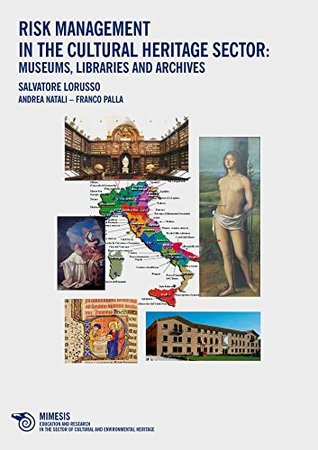
Compra risk management in the cultural heritage sector: museums, libraries and archives.
The risk management, in other words the existence capacity to fight against risks is the most important factor that will reduce the damage of the risk. Cultural heritage risk management risk analysis is a part of “risk management” process includes lots of steps like describing the possible hazards, identifying the priorities, monitoring.
Setting risk culture directly from the top requires a clear statement of intent from leaders in the organisation, laying out their vision and policy for risk management, describing their values and beliefs about risk, and explaining the approach that they intend to take in order to exploit risk and create benefits. The desired risk culture should be actively communicated to all staff, so no one is any doubt about how risk will be addressed within the organisation, and appropriate risk.
We help you measure your current state, find culture risk needles in the haystack. Combining deep specialty in human capital with behavioral science and data align to your.
Cultural differences between countries are the primary causes of cultural risk for foreign direct investment. The risk is associated with differences in language, religious belief, legal origin and other factors, in which values play a recessive and influential role.
Finally, it is important to recognize that this road map focuses on the cultural aspects of risk management. The assumption is that all the components of a formal risk management structure have been adopted, or are being implemented, by the organization.
Welcome to risk management - 9 can you think of a situation where you had to compare risks to make a decision? another important benefit of risk management for cultural heritage is that it encourages collaboration between different disciplines and sectors. It also supports the effective communication of risks and risk-related issues.
The culture channel contains articles on everything from religion and traditions to history and geography. Advertisement topics to explore: history people why 'poop' and 'wiggle' are funny words, accord.
Creating a risk-intelligent culture can secure successful business outcomes and provide visibility that strengthens risk-based decisions and executive oversight. During this webinar, finance thought leaders from oracle and deloitte will discuss the five best practices your organization can use to build a risk-intelligent culture.
B) make use of information provided by existing eu-projects (espon, noah's.
21 sep 2020 in a risk-aware corporate culture, risk management is part of every critical decision by every stakeholder.
A cultural practice is defined as being an object, event, activity, social grouping, or language that people use, produce, and reproduce throughout the event of their normal, everyday lifestyle.
A risk challenge culture: professional skepticism and board oversight of risk; board diversity and expertise development in enterprise risk management (erm);.
– the purpose of this paper is to explore the relationship between factors of socio-cultural contexts and disaster risk. Recent efforts by international organizations and research scholarship have emphasized that applying contextual understandings of human behavior can improve the effectiveness of disaster risk management (drm).
24 sep 2020 environmental risk assessment and mitigation on cultural heritage unesco ( uzbekistan) and ministry of culture (uzbekistan) (as associate.
Historically, risk management, business continuity, and it disaster recovery have all been highly siloed within organizations, and, frankly, many organizations have been planning and testing for specific, isolated incidents.
15 feb 2019 company culture needs a risk-management approach align employees around shared behavioral expectations, and communicate them often.
Cross-culture management entails leading employees from different cultures and navigating any barriers that may arise as a result. Cross-cultural teams can greatly benefit an organization, but can also create issues such as language fluency.
Cultural theory differs from other approaches to risk perception, risk communication, and risk management in several important ways.
Within this, broad observations of behaviour and culture have influenced apra's supervisory assessment of governance and risk management for some time.
Seeing risk management through a cultural lens may be a new way of looking at risk for your.
While organisational culture is a topic for human resources, risk culture should be the focus of your business operations and risk management functions. Some elements of risk culture are: governance - a company’s board or senior management should form a clear and communicable approach to risk, which is understood by all levels of the employee.
The following presentation, strengthening capacity for disaster risk management – the iccrom approach, was given by aparna tandon, project specialist and course leader in the collections unit at international centre for the study of the preservation and restoration of cultural property (iccrom) in rome, italy.
Management in an organisation as well as its simplicity, this study examined the relationship between risk culture and busine ss performance in ghana which is a developing c ountry.
Risk management in any context can be challenging, and crossing cultures can add some unexpected twists on risk management. This essay seeks to talk about some of the unexpected challenges and ways to deal with risk management in a cross cultural and developing country setting. In a same-culture setting risk management is challenging enough.
A security manager's toughest task is to help build a culture of awareness in regards to the risks threatening the organization.
Each year disasters caused by natural and human-induced hazards cause enormous damage to heritage, thereby depriving communities of their irreplaceable.
Post Your Comments: