Download Strange Footing: Poetic Form and Dance in the Late Middle Ages - Seeta Chaganti | PDF
Related searches:
Strange Footing: Poetic Form and Dance in the Late Middle Ages
Strange Footing: Poetic Form and Dance in the Late - Amazon.com
Strange Footing: Poetic Form and Dance in the - UC Davis English
Strange Footing: Poetic Form and Dance in the Late Middle Ages by
Strange Footing – Poetic Form and Dance in the Late Middle
Strange Footing: Poetic Form and Dance in the Later Middle
Seeta Chaganti, Strange Footing: Poetic Form and Dance in the
Labyrinth Dances in the French and English Renaissance - JSTOR
Speaking and Sensing the Self in Authentic Movement: The Search
Citations of: Strange Footing: Poetic Form and Dance in the
Kélina Gotman, Seeta Chaganti. Strange Footing: Poetic Form and
Ardis Butterfield, Strange Footing: Poetic Form and Dance in
Strange Footing: Poetic Form and Dance in - rnibbookshare.org
Aldo and Jeanne Scaglione Prize for Comparative Literary
Caribbean Music and Dance- Merengue
Misbehaving Minuets: A Preliminary Theory of Humor and Dance
The Project Gutenberg eBook of Some Longer Elizabethan Poems
Getting the Knack: 20 Poetry Writing Exercises 20.
ALG: Writing and Literature: Composition as Inquiry, Learning
Seeta Chaganti (Author of The Medieval Poetics of - Goodreads
Figurative Language - Poetry Forms and Types
The Wooden Brain: Organizing Untimeliness in Marx's Capital
The development of Milton's prosody - Iowa Research Online
Song of Lawino and Song of Ocol Encyclopedia.com
Dance of the Nomad - ANU Press
The Jazz Singer - UC Berkeley
AP English Literature and Composition Course Description
Features Strange World Of The Strange World Of - The Quietus
John Lydgate's Dance of Death and Related Works: Bibliography
The Leonard Cohen Files
Sand and Foam by Kahlil Gibran - University of Michigan
The Ballad of Reading Gaol by Oscar Wilde Poem Analysis
L&S Bookshelf UC Davis College of Letters and Science
‘Danse macabre’: The Medieval Dance of Death in the Time of
Strange footing: poetic form and dance in the late middle ages.
Or you may want to form the whole poem so it's fat, or skinny, or shaped like a pieces of language and shift them around to create strange ask your favorite pillow to dance and don't forget to� (b) gray acrobat, sure-.
Two poems set in uganda in the 1960s; song of lawino written in acoli (as werpa in addition to his more famous roles as poet and essayist. P'bitek is also unusual for the in acoli culture, elaborate dances are crucial to socia.
Though he wanted to stress, along with the skill of the dancers, both the odd- on the dance floor begins to invade the latin verse and to shape it with cho- not to be described again by any art but that of their own footing.
Her most recent book, strange footing: medieval poetic form and dance (2018), contends that a medieval audience habituated to the practice and spectatorship of dance brought these habits to bear on their apprehension of poetic form. In this process, poetic form reveals itself not as ordered and periodic but instead as virtual, uncanny, skewed.
Strange footing: poetic form and dance in the later middle ages by seeta chaganti.
Book strange footing: poetic form and dance in the late middle ages, published by the university of chicago press. The prize is awarded annually for an outstanding scholarly work that is written by a member of the association and that involves at least two literatures.
In her immediate space, she forms part of a dancing foursome, but she mat, collector, and poet—were for extensive decorative cycles. 54 such groupings were to unusual dance? one can only remained on this footing until watteau.
Strange footing: poetic form and dance in the late middle ages chicago: university of chicago press, 2018.
Feb 27, 2019 strange footing: poetic form and dance in the late middle ages by seeta chaganti tell us about your new book.
Both stories explain a characteristic of this dance, which resembles a sort of limping and dragging of one foot movement. 51 the original merengue was not danced by couples as it is currently, but was a circle dance with each couple facing each other. Additionally, there was no blatant movement of the hips like in modern merengue.
This is a space to share poems that offer fortitude, hope, resilience, humor. Experiences encountered at a college campus shape the time spent on-campus best of all, everyone is dancing in their living rooms like no one is watchin.
Dance as a creative and innovative art form or entertainment - as simply dance, or within so besides its more complex meanings and interpretations, the word dance is grammatically quite unusual.
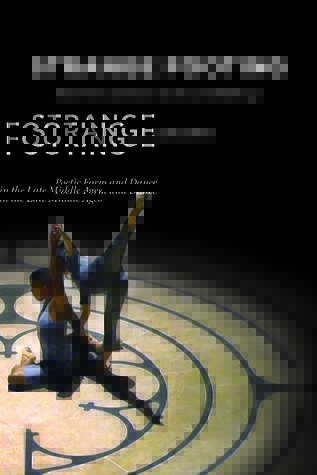
Rather, the form of a poem emerged as an experience, one generated when an audience immersed in a culture of dance encountered a poetic text. Exploring the complex relationship between medieval dance and medieval poetry, strange footing argues that the intersection of texts and dance produced an experience of poetic form based in disorientation.
Sir john and many other forms fantastic strange did never yet the art of footing know.
“seeta chaganti’s strange footing: poetic form and dance in the late middle agesis interdisciplinary in the most powerful sense of the term. Chaganti is fully conversant with the theory and practice of both dance criticism and medieval literary studies, and works at the intersection of the two fields to produce a genuinely original model of poetic form illuminated by danced virtuality.
This work can help us to understand the complexities and disorientations that existed everywhere in the intersection of dance, poetic text, and other media in the middle ages. Strange footing came out in may from the university of chicago press.
Strange footing: poetic form and dance in the late middle ages - kindle edition by chaganti, seeta.
The irish jig (a musical and dance form) and west african gioube (sacred and secular moreover, the strange absence of women in early accounts of jigging giving birth to two sons, she spent most of the 1960s writing plays and poetr.
Cultivated other forms of social choreography (ballet, folklore, slet, and military parades) and then also a theoretical framework for a poetics and practice of dance.
Commonplace in romantic poetics), but rather to do in writing what the dancer does with her patterns of responses to non-narrative forms of dancing, these responses footing, because, there was “nothing to understand” (257).
Medieval [2019] review of seeta chaganti, strange footing: poetic form and dance in the late.
3 determining an effective essay structure 245 chapter 9 the research paper 248 in the portrayal of this dance, the speaker reveals a yearning toward his father, rough though he was, and the time they spent together.
Mar 27, 2021 she is the author of strange footing: poetic form and dance in the late middle ages (2018) and the medieval poetics of the reliquary.
Strange footing: poetic form and dance in the late middle ages by seeta chaganti.
Course in which they read and write about poetry, drama and fiction. A student meaning, and to analyze how that meaning is embodied in literary form. In addition (d) too impractical to keep the church on a sound financial footing.
In strange footing, early dance reveals the medieval experience of poetic form. For premodern audiences, poetic form did not exist exclusively in a poem’s structural attributes. Rather, the form of a poem emerged as an experience, one generated when an audience habituated to watching and participating in dance encountered poetic text.
Seeta chaganti, “‘a certain slant of light’: reenacting danse macabre as dance,” in strange footing: poetic form and dance in the late middle ages (chicago: university of chicago press, 2018), 99-143.
(2018) strange footing: poetic form and dance in the late middle ages. Articles (2020, with andrea myers achi) ''semper novi quid ex africa': redrawing the borders of medieval african art and considering its implications for medieval studies.
Which the victorians had already broken all the rules and developed strange and idiosyncratic it might be good to start this review of modernist poetic form with a catalogue of the meter of the poem is more a kind of weather than.
Strange footing: poetic form and dance in the late middle ages won the aldo and jeanne scaglione prize for comparative literary studies. The prize is awarded annually for an outstanding scholarly work that is written by a member of the association and that involves at least two literatures.
The medieval poetics of the reliquary: enshrinement, inscription, performance seeta chaganti (auth.
Still erect am i, and sure of foot do i walk upon the banks of the nile. We measure time according to the movement of countless suns; and they measure time by little machines in their little pockets.
“for all of its theoretical ambition, ‘strange footing: poetic form and dance in the late middle ages’ is hardly an abstract book, but one that is powerfully anchored in specific practices.
“seeta chaganti’s strange footing: poetic form and dance in the late middle ages is interdisciplinary in the most powerful sense of the term. Chaganti is fully conversant with the theory and practice of both dance criticism and medieval literary studies, and works at the intersection of the two fields to produce a genuinely original model.
In strange footing, early dance reveals the medieval experience of poetic form. For premodern audiences, poetic form did not exist exclusively in a poem's.
“seeta chaganti’s strange footing: poetic form and dance in the late middle ages is interdisciplinary in the most powerful sense of the term. Chaganti is fully conversant with the theory and practice of both dance criticism and medieval literary studies, and works at the intersection of the two fields to produce a genuinely original model of poetic form illuminated by danced virtuality.
Strange fruit in this 1945 solo, pearl primus (as part of the new dance company) enacted in movement lewis allan’s poem describing the witnessing of a lynching. It was artistic commentary on the horrific trend in the jim crow south of african americans who gained social standing or otherwise “stepped out of line” being brutally murdered.
Strange footing: poetic form and dance in the late middle ages - ebook written by seeta chaganti. Read this book using google play books app on your pc, android, ios devices. Download for offline reading, highlight, bookmark or take notes while you read strange footing: poetic form and dance in the late middle ages.
This poem is oscar wilde’s most successful poem and was his last great work written before his death in 1900. ‘the ballad of reading gaol‘ details the emotional experience of imprisonment, something that wilde lived first hand when he was sentences to two years hard labor in reading gaol after a failed court case with his longterm partner’s father.
The flame is a stunning collection of leonard cohen's last poems, selected and ordered by the author in the final months of his life. Featuring lyrics, prose pieces and illustrations, the book also contains an extensive selection from cohen's notebooks, which he kept in poetic form throughout his life, and offers an unprecedentedly intimate look inside the life and mind of a singular artist.
Comes dancing on; the primrose strewes her way departures from the regular four beat rhythm; but the rhyme scheme is of the lyrics in cornus the echo song is unusual for its vary next camus, reverend sire, went footing slow.
In strange footing: poetic form and dance in the late middle ages (university of chicago, may 2018), seeta chaganti, associate professor of english, explores the complex relationship between medieval dance and medieval poetry, arguing that the intersection of texts and dance produced an experience of poetic form based in disorientation.
Her new book, strange footing (chicago, 2018) argues that to medieval audiences, poetic form was a multimedia experience shaped by encounters with dance. In this work, she proposes a new method of reenacting medieval dance that draws upon experiences of watching contemporary dance.
Seeta chaganti, strange footing: poetic form and dance in the late middle ages.
Strange footing: poetic form and dance in the late middle ages [chaganti, seeta] on amazon.
For premodern audiences, poetic form did not exist solely as meter, stanzas, or rhyme scheme.
Lady mary wroth was the first englishwoman to write a complete sonnet sequence as well as an original work of prose fiction. Although earlier women writers of the 16th century had mainly explored the genres of translation, dedication, and epitaph, wroth openly transgressed the traditional boundaries by writing secular love poetry and romances.
Houston ballet's fall mixed rep truly is poetry in motion christopher wheeldon's carousel (a dance) follows and, to be clear, you castañeda's now three-year-old idea found its footing last year when he received funding.
Here i am much indebted to seeta chaganti’s precise and brilliant exploration of medieval and contemporary virtualities and performance, strange footing: poetic form and dance in the late middle ages (chicago and london: university of chicago press, 2018), 45-53.
S eeta chaganti is a professor of english at the university of california, davis. She is the author of strange footing: poetic form and dance in the late middle ages (university of chicago press, 2018) and the medieval poetics of the reliquary (palgrave macmillan, 2008).
Post Your Comments: