Read A History of Adivasi Women in Post-Independence Eastern India: The Margins of the Marginals - Debasree De | PDF
Related searches:
The Past Was Female: Notable Women in History
A History of Adivasi Women in Post-Independence Eastern India: The Margins of the Marginals
How Many Women Are in the World?
Get to Know 6 of the Top U.S. Women in Volleyball History
Jani Shikar: The Powerful History Of Adivasi Women Warriors
The Story Of Adivasis In Assam – Adivasi Resurgence
The Life and Struggles of Adivasi Women - e-PG Pathshala
Adivasis and Land : The Story of Postcolonial Development in
The Invisible Minority: History and the Problem of the Adivasi
Tribal women as the victims of the interrelation between the
(PDF) The Adivasis of India – A History of Discrimination
A look into the Health Status of Adivasi Women in Jharkhand
Catholics on the Margins in India: Dalits and Adivasis - Purdue e-Pubs
7 Enlightening Works Of Adivasi Literature The Curious Reader
The Adivasi Struggle Against Environmental Injustice - The Wire
From the diary of an Adivasi woman: In India, how top-down
The Role of Adivasi Women in the Tribal Freedom Movements
Dalit and Adivasi Women at the Forefront of the Forest Rights
1 MARGINALIZATION: A NARRATIVE OF THE ADIVASI - SHRAM
The Kisan Sabha and Adivasi Struggles in Thane District after - RAS
Rescuing the Identity of the Adivasis from their Invisibility. The
The hipster hunger for superfoods is starving India's adivasis - Scroll.in
Adivasis, Communists, and the rise of indigenism in Kerala
The Story of Adivasis in Assam
eBook Adivasi: A definition coined in the 1930s and related
Adivasi Claims Over Sabarimala Highlight the Importance of
Bapla: The Santhal Adivasi Marriage Adivasi.ozg.in – Tribal
The Status of Adivasi Hill Women
Writing the Adivasi: Some historiographical notes
Adivasi women paving re-enchantment of the forest commons
adivaani: Documenting The Spirit Of The Adivasis TCR
MARGINALIZATION: A NARRATIVE OF THE ADIVASI COMMUNITY IN ASSAM
When women are branded as witches and brutalised The Indian
Armed With a Toothless Law, the Plight of the Adivasi Worsens
History is being deliberately neglected: Sabarimala and the
Adivasis and the Indian State: How local self-governance in a
Adivasi and the fulfilment of life Reflections of India
Bulu Imam: A Lifetime of Working with Adivasi Art and the
There was an urgent need to prevent unnecessary deaths and provide health care. So, we launched the community health programme in the villages – training adivasi women on preventive health care, immunising and monitoring the pregnant women and children, and improving health awareness in the community.
The indian economic and social history review, 53, 1 (2016): 1–23 writing the adivasi / 3 indeed, sumit guha’s recent book argues that if we rewrite the history of pre- colonial india as a history of the evolution of ‘society’ out of complex interactions of diverse jatis, colonial sociological categories such as caste and tribe would.
Jani shikar is a commemoration of a famous battle where women from the oraon tribe valiantly fought and protected their community from an invading army, defeating them in combat not once but twice.
With the wave of neoliberal reform in the 1980s and 1990s, adivasi populations became the first victims of expropriation—for dams, mining, and other forms of resource extraction in india’s hinterlands. 56 sexual violence against adivasi women—often at the hands of the police, army, or paramilitary squads—accompanied and continues to mark.
In india it is commonly called 'adivasi literature' in hindi and other indian languages.
By highlighting the issue of women’s collective rights, our workshops attempt to be a corrective to the middle class feminist understanding of land rights, understood within the framework of private property. For forest dwelling dalit and adivasi women, the relationship with land is material as well as cultural and ecological.
Yet almost 66 years after independence, india’s adivasi people continue to be treated shabbily. They are described practically universally, in even our best newspapers and magazines, as primitive and backward. Our media is totally ignorant about the meaning of adivasi culture and history.
He described the similarities between patterns made by adivasi (tribal) women artists on the walls of their houses and the rock art from prehistoric periods found in sites around hazaribagh. He discussed the etymology of the word sohrai, which refers to the harvest festival celebrated across the region.
Sarpanch usha supe is an adivasi woman, who is highly respected for her credibility, hard work, and for being a strong voice of adivasis in the village, which she has been serving for the past three years.
Adivasi (editor: indigenous people, original inhabitants) communities have been historically marginalised and oppressed by the dominant communities and interests that exploit tribal lands, resources, minerals, and forests. The neo-liberal policies and schemes implemented by the state are leading to further marginalisation of tribals.
Women in the state, especially from adivasi communities, have been disproportionately affected by violence and discrimination by officials. On march 9, hidme markam participated in an event at sameli, dantewada to mark international working women's day and to commemorate the death of two young women, one of whom was confirmed to have died whilst in police custody, in chhattisgarh.
Officially adivasis are termed 'scheduled tribes', but this is a legal and c onstitutional term, which differs from state to state and area to area, and therefore excludes.
On a comparative basis it is visible that amongst the deprived and downtrodden communities of india, on the health front the adivasi women suffer the most. When talking of such indicators, the child-marriage and early age (15-19 years) child-bearing numbers are the worst for the adivasi women (when compared to obcs and scs) (reddy 2008).
2 nov 2017 one of the poorest and most marginalized communities in india, health status of adivasi women in india is in need of immediate special.
In the fifth chapter i discuss the more problematic ramifications of imagining “ natural orissa” as a homogenous historical homeland.
The oral history of this adivasi community established that the temple was gender neutral before falling into the hold of brahminism. The practice of excluding women on the basis of age and bodily conditions was never imposed. It was only after 1950s that ayyappan was turned into a hyper-masculine deity.
Abstract: this article traces the history of the all india kisan sabha (aiks) in thane district, maharashtra, after 1947, that is, after the warli adivasi revolt of 1947.
Marginalization of adivasi women in chittagong hill tracts (cht), bangladesh. In the context of the historical marginalization of adivasi people from diverse.
Marriage in santhal adivasi community is sign of a prosperity and beginning of new life. In spite of some social upheaval in social norms during the past century in santhal communities, one can find the institution of marriage is very strong.
The author reviews a number of interpre- tations of biblical theology in relation to dalit experience, as well as the christology of a pioneering adivasi theologian.
Armed with a toothless law, the plight of the adivasi worsens. Since coming into effect 21 years ago, pesa has been grossly misused and underutilised, disenfranchising adivasi communities all over.
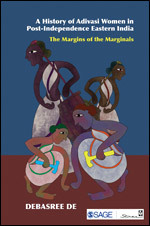
A history of adivasi women in post-independence eastern india: the margins of the marginals tells the story of one of india’s most marginalised social groups.
The un-declared international day of the world’s indigenous peoples on august 9 is an opportune time to reflect on one of the most common forms of violence experienced by tribal or adivasi women in india – witch-hunting, where women are accused of possessing occult powers to harm others.
These lesser-known women deserve to be recognised for the awesome things they accomplished. These lesser-known women deserve to be recognised for the awesome things they accomplished.
In 2000, she was shortlisted among 1000 women for the noble peace prize. Subject to acid attacks and brutal torture by the indian state, adivasi teacher turned activist, soni sori is one of the reflections of the struggles of adivasi women in india. She is a valiant fighter who resisted state violence on tribals in chhattisgarh.
It engages with the ongoing dialogue amongst those who write the adivasis into the larger project of history‐writing, and sets out the markers of the field of adivasi studies from a historian's.
Adivasi studies is a new scholarly field, drawing upon archaeology, anthropology, agrarian history, environmental history, subaltern studies, indigenous studies, aboriginal studies, and developmental economics.
(ekta parishad / cc by-sa) broken promises� the hasdeo arand was legally protected until 2009 and mining was forbidden in this forested area. A new indian government permitted the opening of a new mine, which opened in 2013.
10 jun 2014 due to poor education system or lack of quality education, indigenous women remain in a cycle of illiteracy.
20 feb 2013 and keep our movement alive, rewrite history, and retell it to the world, said 48 -year-old dayamani barla.
With growing conversation around forest rights, we need to understand how india’s adivasis and forest dwellers have played a key role in protecting forest cover and biodiversity. It is also important to examine their culture and history of living in harmony with nature and see for oneself how their existence is symbiotic with the forests.
The genesis of adivasi munnetra sangam (ams) goes back to 1986. Stan and mari started accord as an activist group in response to the rampant land alienation of the adivasis in the gudalur valley and to help the adivasis organise themselves in order to assert our human rights - especially our land rights.
In 2003, hundreds of adivasis in mutthanga made huts in the forest land and claimed right over the land and created the adivasi gramsabhas there. Police opened fire on hundreds of unarmed adivasi women and children. An adivasi, was killed in the police firing and many others were seriously injured.
Witch hunting in adivasi society (special reference to north bengal) malay saha, research scholar,department of history north bengal university adivasi is an umbrella term for a heterogeneous set of ethnic and tribal groups believed to be the aboriginal population of india.
Nine years on, the st status continues to elude laxmi and more than 60 lakh tea garden workers in assam despite a history of protests. A month after the beltola incident, the all adivasi national liberation army, an adivasi militant group, triggered a blast in the new delhi-bound rajdhani express near sungajan railway station in assam's.
Women of the tharu adivasi community, organised as the tharu mahila adivasi mazdoor kisan manch, immediately confronted the forest department officials, and a long verbal battle ensued, in which the officials threatened violence and declared that the women could not enter the forests.
The tea-garden labourers of assam, branded as the 'tea-tribes', generally prefer to be called as 'adivasi'. Embracing adivasi nomenclature is a deliberate move on the part of the tea-garden labourers to assert their tribal identity as also to represent their collective demand for indigenous rights, including the recognition for achieving the status of 'scheduled tribe'.
When wounds become a subject of cynicism for thesuffering community, one can concur that the state of affairs is deplorable. From the 2007 dispur incident, where an adivasi woman was stripped naked inpublic, to the 2012 killings of a tea management family at kunapathar tea estate (followed by a cannibalistic feast), the frustration of adivasi labourers raises some silenced issues.
An adivasi man and an elderly adivasi woman who were working in their fields, were attacked by 10-20 non-adivasi armed men of the rajwade clan. The adivasis were beaten, chased and dragged out of the field to the main road, where the man was killed. It was alleged that the two had sacrificed a girl child for the sake of better crops.
The temple, managed by the socio-religious trust travancore devaswom board, is a shrine to ayyappan, a deity regarded as a naishtika brahmachari —eternally celibate—in hindu mythology. Around 1955, the tdb prohibited the entry of women in the age group of 10–50 years to “protect ayyappan’s vow of celibacy.
Learn about the half of history missing from many history books with biographies, articles, timelines and other resources on the women—famous and lesser-known—who have shaped our world.
In recent years, while some adivasi communities have been mobilized by hindutva (hindu nationalist) political forces [], others have attempted to revive traditional adivasi religions like the sarna dharm (sacred grove religion). Source: nandini sundar in encyclopedia of india by stanley wolpert, editor in chief.
Subject to acid attacks and brutal torture by the indian state, adivasi teacher turned activist, soni sori is one of the reflections of the struggles of adivasi women in india. She is a valiant fighter who resisted state violence on tribals in chattisgarh. She was arrested by the delhi police in 2011 on false charges of being a naxalite.
Oswald spengler, the famous german historian and philosopher, believed that the linear view of history is intellectually dead. So, in the many mutinies and revolutions india witnessed since 1715, perhaps the participation of adivasi women never made its mark in our history books.
They belong to adivasis are not as a general rule most common problems which adivasi women face is sexual exploitation.
In honor of women’s history month, we’re taking a look at the leaders, racers and innovators in the world of cars. From record-breaking races to inspirational innovation, women have been an invaluable force in the automotive industry since.
Colonial history and post-colonial politics, and the such as bengali muslims, adivasis (tribal commu- when adivasi women have home births, this is seen.
As an adivasi/indigenous person of central india, the realities depicted in aboriginal, indigenous movies helped me understand, reconnect and make sense of my own self, identity and community, better. Here is a list of some of my favorite aboriginal, indigenous movies based in australia and new zealand, that you may also find interesting:.
To understand and document the legal, social, cultural, institutional and other challenges faced by adivasi women in asserting and claiming their rights over.
13 mar 2021 lakshmi is the goddess of rice in bastar and women called gurumai sing migration, aesthetics as well as history and theory of anthropology.
A history of adivasi women in post-independence eastern india is a path-breaking book that explores the current status of adivasi women in the four states of eastern india with high percentages of adivasis—bihar, jharkhand, odisha and west bengal. Debasree de engages with the recent paradigm of ‘development and displacement’ and adivasi women’s marginalization and cultural silencing.
Ranchi (jharkhand) [india], october 30 (ani): adivasi women don't eat nutritious food during pregnancy and also don't take iron pills on a regular basis because it is a myth amongst them that they will have problems at the time of delivery of the child due to the pill. Gnm, at the community health centre located at shikaripada, in jharkhand's district dumka.
Adivasis is the collective name used for the many indigenous peoples of india. The term adivasi derives from the hindi word ‘adi’ which means of earliest times or from the beginning and ‘vasi’ meaning inhabitant or resident, and it was coined in the 1930s, largely a consequence of a political movement to forge a sense of identity among the various indigenous peoples of india.
Batiks are traditionally made by women as a pastime, but some town and villages have specialised in making batik, such as pekalongan, kauman, kampung taman and laweyan. The javanese art of wood carving is traditionally applied to various cultural attributes such as statues, (wayang-)dolls, and masks.
With the neglect of adivasi languages, the state larly in the hindi-hindu paradigm, has suppressed tribal and the dominant social order aspire to culturally and languages, defiled cultures and destroyed civilisations. Socially emasculate the adivasis, subdued by the domi- the creation of a unified, albeit centralised polity, and nant cultures.
Book academic books history create a flyer for a history of adivasi women in post-independence eastern india please select from the following options what you would like to be included in the flyer.
23 nov 2017 we were adivasis takes readers into the daily lives and aspirations of the dhanka of rajasthan—a community that challenges anthropological.
Nine years on, the st status continues to elude laxmi and more than 60 lakh tea garden workers in assam despite a history of protests. A month after the beltola incident, the all adivasi national liberation army, an adivasi militant group, triggered a blast in the new delhi-bound rajdhani express near sungajan railway station in assam’s.
This experience is not only true of the adivasi, but also the australian aboriginee, and other native people. The alienation of the adivasi so often reminds me of the loss felt by my aboriginal brothers and sisters.
29 nov 2019 there are so few adivasis working in a sector that envisions empowering of the adivasi communities and other marginalised groups.
There is a whole history of legislation, both during the in the mid-indian region the gond, who number more pre-independence as well as post-independence period, than 5 million, are the descendants of the dark-skinned which was supposed to protect the rights of the adivasis.
Adivasi women have a history of long-fought battles and display of bravery. The santhal women contributed significantly to the 1855 santhal rebellion against both the british and the zamindari system. According to reports, almost every santhal woman was a rebel and was also imprisoned for her active involvement in the uprising.
9 oct 2020 this was despite the fact that her family had been a victim of the problem for 30 years.
(all of the pictures and most of the following information come from the terrific catalog of the exhibit of the history of underclothing at the historical museum of the city of frankfurt am main, germany, in 1988: authors, almut junker und eva stille [almut is a woman's name], zur geschichte der unterwäsche 1700-1960.
The first one deals with the situation of adivasi women in their traditional societies. The second part deals with the laws and policies adopted by the colonial and present governments and their impact on the adivasis especially women.
For a long time, adivasi literature has largely remained in the shadows. The adivasis (or people from tribal communities) have a rich tradition of oral storytelling.
Adivasi, (hindi: “original inhabitants”) any of various ethnic groups considered to be the original inhabitants of the indian subcontinent. In the constitution of india, promulgated in 1950, most of these groups were listed—or scheduled—as targets.
T he book unearths and presents three generations of tribal women leadership in india and portrays their existence in indian history, both in past and modern contexts. It also shares the life stories of women from across the country, ranging from freedom fighters� rani gaidinliu from manipur,.
28 sep 2010 yet in the course of the 1990s, a serious alternative to communist ideology has started emerging in the form of a movement focused on “adivasi”.
It shows that the integration of the adivasis in general, and adivasi women in particular, has been a result of agrarian distress and macro-economic trends that have structured the patterns of dispossession, displacement and urbanization in the last two decades.
India can improve women’s access to social freedoms, which i examine through encounters between dalit (low-caste) and adivasi (indigenous) women – the most marginalised and impoverished strata of women in india – and the periyar tiger reserve’s conservation regime in south india.
“adivasi [adibasi] – which is derived from sanskrit – is applied to the dark-skinned or austro-asiatic indigenous groups of india (usually those from eastern india). It is a commonly-used term in jharkhand, bihar, west bengal and odisha.
Csj deals with issues of women’s rights, land rights, labour rights and forest rights within a framework which looks to analyze the relationship between the adivasis and the state. The organization constantly attempts to perceive the consociation which exists between adivasi rights and progressive laws such as fra, pesa and government schemes.
The conversations among adivasis, between adivasis and settlers, between adivasi women and their children become in media res dialogues of their border subjectivity. This was an empirical study in attappady in which life experiences, oral history and myths were studied using narrative analysis.
However, adivasi is the most negative and obnoxious among all of them. Generally, the term adivasi is used for tribes that has existed since ancient times. The word “adivasi” is made up of the two words “adi” and “vasi” and means a person or community inhabiting a geographical area (kharte 2018).
One of the larger challenges for adivaani has been fighting through stereotypes and prejudices that define adivasi being. Our first book was in roman santali about the santals as a people, their history and entity.
Post Your Comments: