Read Taming Idiopathic Toe Walking: A Treatment Guide for Parents and Therapists - Ileana S. McCaigue OTRL | ePub
Related searches:
Taming Idiopathic Toe Walking: A Treatment Guide for Parents and
Taming Idiopathic Toe Walking: A Treatment Guide for Parents and Therapists
Taming Idiopathic Toe Walking: A Treatment Guide for - Amazon.com
A Treatment Protocol for Idiopathic Toe Walking - Cascade Dafo
Taming Idiopathic Toe Walking : A Treatment Guide for Parents
Idiopathic toe walking in children Skills for Action
Interventions for idiopathic toe walking
Idiopathic toe walking: for therapists Skills for Action
Idiopathic toe-walking: a review Developmental Medicine and
Download Taming Idiopathic Toe Walking Treatment Guide for
Toe walking - Diagnosis and treatment - Mayo Clinic
Toe Walking and Autism Spectrum Disorder Autism Research
What is idiopathic toe walking? toe walking is when a child walks up on the balls of their feet without their heels touching the ground. While there can be many medical conditions that can cause toe walking, idiopathic toe walking refers to those toe walkers that have an unknown cause.
Background: idiopathic toe walking (itw) is an exclusionary diagnosis given to healthy children who persist in walking on their toes after they should typically have achieved a heel-toe gait. The literature discusses conservative and surgical interventions using a variety of treatment modalities.
Treatment of idiopathic toe walking has been a challenging issue for me; and, in my experience, not treating the source and deficits has resulted in long-term.
” taming idiopathic toe walking” is a useful practical guide to the the understanding of toe walking in the spectrum of motor disability. The book defines the problem well; all toe walking is not cerebral palsy. Its origin as a sensory phenomena, often reinforced by habit, is explained clearly and succinctly.
About a specific type of toe walking called idiopathic toe w alking. Idiopathic toe walking, sometimes referred to as habitual or behavioral, occurs when a child walks on the balls of their feet for an unknown reason. This term applies to toe walking in a child who has been evaluated by their doctor and no medical reason has been identified.
By around 24 months, they should walk with their feet flat on the ground. By 3 years of age, children should walk with a heel-toe pattern.
A non-invasive, efficient and effective sensory treatment strategy for children and adolescents that display atypical toe walking.
Most commonly, toe walking is considered “idiopathic”, meaning the exact cause is unknown. This cause is often determined by ruling out all other possible causes of toe walking.
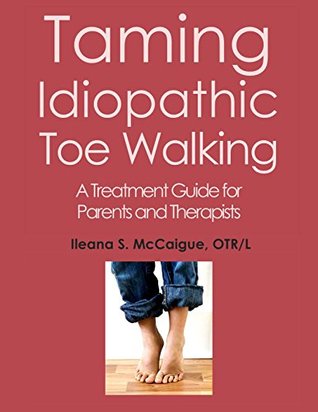
Taming idiopathic toe walking is an easy-to-read guide for parents and pediatric, rehabilitation therapists with information on the categories and treatment of atypical toe walking behaviors. This manual explains when toe walking is considered developmentally unusual for a child’s age, and idiopathic or done for no known reason.
A novel method for assessing idiopathic toe walking children.
Toe walking is quite common in young children, age 3 and younger; but toe walking, especially in children 5 years and older, is often associated with neurological immaturity. Many parents and professionals are not aware of the various interventions used to treat toe walking. The following interventions are listed from least to most invasive.
• idiopathic toe walking (itw) is a term used to describe the condition in which children ambulate with a bilateral toe-toe pattern without any known reason or pathology (sala 1999). • in typically developing children, a heel strike occurs by 18 months of age (or 50 weeks after the onset of independent ambulation) (sutherland 1980).
In children and young adults ages 2 through 21 years� publication date: 15-feb-2011� target population inclusions: children or young adults: • with onset of toe walking since independent ambulation • who toe walk bilaterally • with habitual or idiopathic toe walking • ages 2 to 21 years.
Treatment of idiopathic toe walking: a systematic review of the literature. Effect of a nonsurgical treatment program on the gait pattern of idiopathic toe walking: a case report.
Repetitive heel-toe walking pattern in braces creates a new habit within the brain that over time can defeat toe walking. Surgery – if conservative treatment (casting, bracing, and physical therapy) do not show progress, the next step is surgery to physically lengthen the short achilles tendon to get the child down on their heels.
Habitual toe walking learn to evaluate and treat this idiopathic childhood condition. Habitual toe walking objectives after reading this article the pod-iatric physician should be able to: 1) recognize a pediatric patient that exhibits habitual toe walking 2) take a proper medical and family history of a child suspected of toe walking.
Meaning, you gotta rule out other reasons for a child walking on their toes and this is what you have left. The professionals we have talked to (and the research we have done) say that idiopathic toe-walking is the brain not having the muscle memory to know how to walk.
Taming idiopathic toe walking: a treatment guide for parents and therapists is a great, new electronic book that provides a non-invasive, efficient.
Mar 23, 2017 new book entitled taming idiopathic toe walking: a treatment guide for parents and therapists written by ileana mccaigue, otr/l.
Taming idiopathic toe walking is an easy-to-read guide for parents and pediatric, rehabilitation therapists with information on the categories and treatment of atypical toe walking behaviors. This manual explains when toe walking is considered developmentally unusual for a child's age, and idiopathic or done for no known reason.
Find helpful customer reviews and review ratings for taming idiopathic toe walking: a treatment guide for parents and therapists at amazon.
Several neurologic and developmental abnormalities and may be the first sign of a global developmental problem. Cases that lack a definitive etiology are categorized as idiopathic. A detailed history, with careful documentation of the developmental history, and a thorough physical examination are required in the child with a primary report of toe walking.
Idiopathic toe-walking (itw) is a term used to describe the condition in which children walk with a toe–toe gait pattern in the absence of any known cause. It has also been referred to as habitual toe-walking and congenital short tendo calcaneus (tendo achilles).
Treatment of idiopathic toe walking has been a challenging issue for me; and, in my experience, not treating the source and deficits has resulted in long-term orthopedic and functional problems. In my work as a school pediatric physical therapist, i have recently developed a strategy that works for my patients.
Idiopathic toe-walking idiopathic toe walking, itw, is an abnormality of gait which is typically characterized by an absence of a normal pattern of heel-to-floor contact by both feet. In itw, the forefoot is involved in the majority of contact with the floor during the gait cycle.
Idiopathic toe walking physical therapy some physical therapies are recommended by the professionals for the management of this condition, including; gastrocnemius (ankle dorsiflexion/plantar flexion): with the child lying on back or seated, by holding the child’s foot in hand, light pressure is applied.
Mccaigue, otr/l, ' taming idiopathic toe walking: a treatment guide for parents and therapists' serves.
Preview a taping technique used in the toe walking solution program designed to resolve your child's toe walking naturally.
Compare and contrast toe walking associated with disease and toe walking in the absence of a medical condition. Identify and discuss a comprehensive evaluation for a patient referral due to toe walking. Analyze and synthesize current research and clinical criteria in the diagnosis of idiopathic toe walking.
Post Your Comments: