Read online Water Scarcity, Climate Change and Conflict in the Arab World: Agriculture and Security in the Mena Region - Chris Ward file in ePub
Related searches:
Water and the global climate crisis: 10 things you should know
Water Scarcity, Climate Change and Conflict in the Arab World: Agriculture and Security in the Mena Region
The World Is in a Water Crisis and Climate Change Is Making it
Water Scarcity and Climate Change - Before the Flood
Climate Change and Water Scarcity: The Case of Saudi Arabia
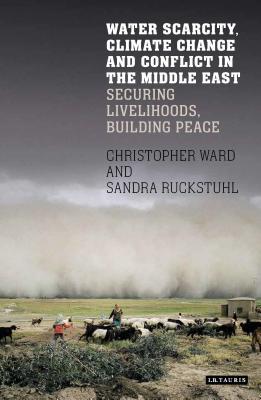
Water Scarcity, Climate Change and Conflict in the Middle
In the face of climate change: Challenges of water scarcity and
The Global Framework on Water Scarcity in Agriculture - Food and
High and Dry: Climate Change, Water, and the Economy
How Climate Change Impacts Our Water - State of the Planet
The effects of climate change on water shortages - Stanford Earth
To solve water scarcity and climate change, we must act now Earth
5 reasons why the climate crisis is a water crisis - Stockholm
Water access, water scarcity, and climate change
USDA ERS - Climate Change, Water Scarcity, and Adaptation in
Water, sanitation and hygiene (WASH) and climate change UNICEF
The effects of climate change on water shortages Stanford News
Water and Climate Change
Global Warming and Water Shortages New Hampshire Public Radio
Water Scarcity, Conflict, and Security in a Climate Change World
4: Climate change will severely exacerbate the water crisis - 10 New
Climate change and corruption endanger an ancient valley in
Water Stress; Triggered by Climate Change and Our Daily
Climate change and water scarcity disrupting youth
Water security and climate change: how science can help
World Water Day: Challenges and Solutions for Water Scarcity
Water, Crisis and Climate Change in India: A Policy Brief adelphi
Climate Change is Driving Water Scarcity across the West Audubon
Climate Change, Water Scarcity, and Health Adaptation in
Climate Change, Water Security, and U.S. National Security - Center
Water resources an essential part of the solution to climate change
Scarcity or abundance? The risks with climate change you
Water scarcity, drought and challenges related to climate change
Climate Change and California's Water - Public Policy Institute of
Climate change and water scarcity: how can urban utilities respond?
Climate change and water scarcity disrupting youth livelihoods in
Water and climate change IUCN
WATER SCARCITY, CLIMATE CHANGE, AND WATER QUALITY: THREE
Water scarcity and global warming - Time for Change
Water in the Balance : The Economic Impacts of Climate Change
Water scarcity and reduction in crop yield due to climate
World Water Development Report 2020 – Water and Climate Change
Aug 6, 2019 a combination of climate change, inefficient water use, and inadequate infrastructure has thrown india into a full-blown water scarcity crisis,.
Climate change manifests itself primarily through changes in the water cycle. As climate changes, droughts, floods, melting glaciers, sea-level rise and storms.
Water and climate change water is the primary medium through which we will feel the effects of climate change.
Climate change means more action is needed to address risk of uk heatwaves and water shortages.
May 13, 2020 in the loggu community in the upper west region of ghana, water stress due to changing rainfall patterns and poor management of water.
Dec 27, 2018 however, impacts of climate change-induced water scarcity on health and well- being are complex.
Water is also at the heart of adaptation to climate change, serving as the crucial link between society and the environment. As the global population grows, there is an increasing need to balance all of the competing commercial demands on water resources so that communities have enough for their needs.
Mar 20, 2020 contact global warming causes disastrous impacts on the water cycle� the most profound effect of global warming is how it affects the water.
The impact of climate change, combined with population growth, means the country is facing an existential threat, sir james bevan told the waterwise conference in london.
Water extremes affected by climate already contribute to the migration and displacement of millions of people, and could further global migration crises.
Dec 10, 2020 more than 2 million people around the world don't have access to clean water.
As climate change continues to progress, scientists are warning that water scarcity could become such an issue that it hinders economic growth, spurs migration and sparks conflict, creating large.
Jan 26, 2021 the picturesque tropical islands are surrounded by water, yet shortages are a daily reality for many.
Feb 27, 2020 uganda's water minister ronald kibuule said with rapid urbanization in africa, there is high per capita water consumption and demand continues.
Water scarcity through climate change and the resulting increase in the costs of water can lead to inequitable access. This may deprive households of opportunities to collect the amount of safe water needed for proper handwashing and hygiene, limiting children’s ability to grow up healthy and strong.
Stanford researchers explore the effects of climate change on water shortages in jordan, one of the most water-poor nations, predictions of future droughts depend on the scale of climate change. Without reducing greenhouse gases the future looks dry, but researchers offer some hope.
Water scarcity, climate change and conflict in the middle east: securing livelihoods, building peace (international library of human geography) [ward, christopher, rucksthuhl, sandra] on amazon.
Water scarcity, climate change and erratic weather systems are likely to further imperil stability across the middle east. No fewer than 12 countries in the region make the list of the world’s.
Water scarcity, insufficient freshwater resources to meet the human and environmental demands of a certain area. Given the challenges of population growth, profligate use, growing pollution, and global warming, many countries and major cities worldwide are faced with increasing water scarcity.
More heat and moisture in the atmosphere are contributing to more severe storms and flooding. Warming lakes and streams are beginning to devastate fisheries.
As a result, in a warmer world, the air will suck up more water from oceans, lakes, soil and plants.
Having enough water is only part of the issue, however: it must also be available when and where it is most needed. In the past few decades, the balance between water supplies and human need has come under increasing threat from growing populations, urbanisation and, most recently, climate change.
The 2020 united nations world water development report focuses on the challenges, opportunities and potential responses to climate change, in terms of adaptation, mitigation and improved resilience that can be addressed through improving water management. Combining climate change adaptation and mitigation, through water, is a win-win proposal.
These water crises have resulted in a lack of sanitation and water-borne diseases, food insecurity, conflict, financial instabilities, infrastructure damage, and biodiversity loss. Most of these consequences are getting worse due to climate change. Climate change is significantly transforming the water cycle.
Water scarcity is defined as per capita supplies less than 1700 m3/year (ipcc 2007).
The ongoing hot drought—less precipitation, hotter climate extremes, drier soil conditions—impacts our water reliability. We have already seen the impact of climate change in real-time and adapted to it, just look at the drought contingency plan the state agreed to in 2019. This adaptation is a response to the most severe drought on record.
Climate change is already affecting water access for people around the world, causing more severe droughts and floods. Increasing global temperatures are one of the main contributors to this problem.
As global temperatures have steadily increased at their fastest rates in thousands of years due to the greenhouse effect, the change has directly affected things like water vapor concentrations, precipitation, and stream flow patterns.
Water scarcity (water stress or water crisis) is the lack of fresh water resources to meet the standard water demand. Humanity is facing a water crisis, due to unequal distribution (exacerbated by climate change) resulting in some very wet and some very dry geographic locations, plus a sharp rise in global freshwater demand in recent decades driven by industry.
Water scarcity, exacerbated by climate change, could cost some regions up to 6% of their gdp, spur migration, and spark conflict. The combined effects of growing populations, rising incomes, and expanding cities will see demand for water rising exponentially, while supply becomes more erratic and uncertain.
Changes in temperature, precipitation, and humidity due to climate change may have significant implications for the quality and quantity of water.
This world water day, let’s recognise the value that the solar impulse foundation’s labelled solutions can play in advancing action on climate change, water scarcity and other environmental issues to facilitate a transition to a sustainable future.
Sep 9, 2019 the world is in a water crisis and climate change is making it worse the world resources institute (wri) updated its global water risk atlas.
Climate change will have its most direct impact on child survival through three direct channels: changing disease environments, greater food insecurity, and threats to water and sanitation. Climate change is projected to increase the number of water-stressed regions and exacerbate shortages in already water-stressed regions.
Climate change, such as altered weather-patterns (including droughts or floods), deforestation, increased pollution, green house.
The fraction of global population experiencing water scarcity and the fraction affected by major river floods increase with the level of climate change in the 21st.
Jun 11, 2019 when the quality of freshwater resources deteriorates, they may no longer be fit for drinking or for the cultivation of food crops.
Earlier this week, united nations recognized its world water day with the theme “water and climate change. Emphasized the urgent need to act on water scarcity, while highlighting the uphill battle we have ahead of us: as climate change intensifies, the water scarcity crisis becomes more complex.
Jan 25, 2021 climate change is driving water scarcity across the west. Arizona needs progress on its clean energy standards, not retreat.
This article investigates the approaches of the various discourses operating in the water sector and how they address the issues of scarcity and equitable access under projected climate change impacts. Little synergy exists between the different approaches dealing with these issues. Whilst being a sustainable development and water resources management issue, a holistic view of access, scarcity and the projected impacts of climate change is not prevalent in these discourses.
Jun 2, 2020 the new study, published in earth's future, examines how climate change could shape water stress across international borders.
Climate change is expected to account for about 20 percent of the global increase in water scarcity this century. The intergovernmental panel on climate change (ipcc) predicts that global warming will alter precipitation patterns around the world, melt mountain glaciers, and worsen the extremes of droughts and floods.
Aug 26, 2020 as the demand for water increases, and climate change places stress on water availability, finding ways to effectively manage urban water.
Mar 21, 2020 much of the impact of climate change on water resources will be as is already done in water-scarce countries such as jordan, mexico, peru.
To understand whether these impacts can be mitigated, a team of agricultural economists from purdue university assessed the economic impacts of climate-change induced water scarcity and crop yields change for six middle eastern countries in a research report supported by world bank group.
Beyond drinking, water supply is intimately linked to food security, sanitation, and hygiene, which are primary contributors to the global burden of disease. Poor and disadvantaged populations are the ones who will suffer most from the negative effects of climate change on water supply and associated human health issues.
Water scarcity and limited agricultural opportunities are encouraging youth to migrate out of rural areas in search of better employment elsewhere. However, improved water access could help young farmers adapt to climate variability.
Sep 7, 2020 according to the wri, more than two billion people live in countries experiencing high water stress.
Rainfall declines induced by climate change are expected to be compounded by historically limited water resources and ballooning population growth punctuated by influxes of refugees. What’s more, flows in one of the nation’s key freshwater resources – the yarmouk-jordan river – have dwindled as a result of dam building and have also been affected by conflict-driven land-use changes in syria.
The two critical phenomena, climate change and water scarcity are closely interlinked, where climate crisis affects and is also affected by global water resources. Even without a massive driving factor such as the climate change, the global water crisis, on its own, is already a significant threat to majority of the world population.
Fieldcrop sector� by elizabeth marshall, marcel aillery, scott malcolm, and ryan williams, ers, november 2015 return to top ers links.
Climate change is expected to result in more variable weather patterns throughout california.
One of the findings of the worldwatch institute's family planning and environmental sustainability assessment (fpesa) suggests it's not accurate to claim that.
Many climate change proponents are now warning that the world is heading toward a massive global water crisis.
Agriculture, encompassing crops, livestock, fisheries, aquaculture and forestry, is both a cause and a victim of water scarcity.
Mar 22, 2019 when waterways run dry, animals may seek out drinking water from places where people live, increasing the likelihood of contact between.
Climate change is disrupting weather patterns, leading to extreme weather events, unpredictable water availability, exacerbating water scarcity and contaminating water supplies. Such impacts can drastically affect the quantity and quality of water that children need to survive. Today, a change in climate is felt primarily through a change in water.
Abstract innovations in water management and irrigated agriculture powered water-scarce middle eastern economies for millennia. However, as water becomes scarcer because of population growth and economic development, and even more erratic because of climate change, the region’s water security is coming under increasing threat.
Post Your Comments: