Download Human Nature and Morals According to Auguste Comte - John K. Ingram file in ePub
Related searches:
Human Nature and Advertising - The Atlantic
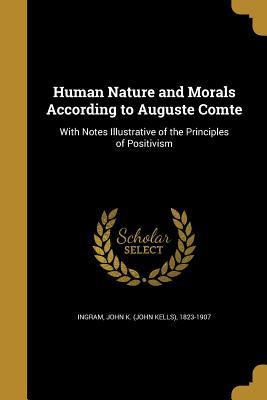
Human Nature and Morals According to Auguste Comte
Human nature and morals according to Auguste Comte: with
Human nature and morals according to Auguste Comte : with
Human Nature and Morals According to Auguste Comte: With
Aristotle's Ethics: Moral Development and Human Nature
Humans, Nature, and Ethics Center for Humans & Nature
On Human Nature and Morality: Humans are Intrinsically Good
The Nature of Morality and Moral Theories - University of San Diego
Human Nature, Morality, and Society - History of Psychology
Human Nature and Moral Norms - Oxford Handbooks
Human nature and morals according to Auguste Comte : Ingram
Ethics and Morality Psychology Today
Hobbes, Thomas: Moral and Political Philosophy Internet
Freud's Id, Ego, and Superego - Verywell Mind
Art, Morality and Human Nature: Writings The British Journal of
Human Nature and Moral Theory in Plato’s Republic Essay
Marxism, morality, and human nature International Socialist
Philosophical Issues: Human Nature - Dewey and Wilson
Hume and Kant on our obligations to non-human animals - ABC
Rationality, Animality, and Human Nature: Reconsidering Kant's
Aristotle and Game Theory on Human Nature and Ethics
Human Nature and Nature of Morality Al-Islam.org
Human Nature, Religious and Philosophical Aspects
Machiavelli's View of Human Nature AND rELIGION
Hobbes's moral and political philosophy - Wikipedia
Moral Virtue and Nature: A Defense of Ethical Naturalism
Morality and Nature in Good Vs. Evil - Hindu Website
Nietzsche and Morality Issue 70 Philosophy Now
Human Values: Meaning, Nature and Types
Selected Views on Human Nature and their Implications on
PHILOSOPHY OF MIND AND HUMAN NATURE
Emphasizing Morals, Values, Ethics, And mohammad.chowdhury
Christianity - Human Nature and the Purpose of Existence
Rousseau and Human Nature - Philosophy & Philosophers
Human Nature, Moral Order, and the Quest for Peace John
Mencius And Xunzi's View Of Human Nature Is Evil - 868 Words
Morality and Human Nature - JSTOR
(PDF) Morality and Human Nature (draft) Fernando Arancibia
When are human beings morally reponsible, and when not
Emerson's Nature Summary and Analysis
Butler and Kant on Human Nature and Morality
Hume: Morality and Religion - Philosophy Pages
Would You Cheat? Cheating Behavior, Human Nature, and
Morals refer to human behavior where morality is the practical activity and, ethics describes the theoretical, systematic, and rational reflection upon that human behavior (churchill, 1982). Values are linked to beliefs and attitudes and guide human behavior (rennie, 2007).
Questions concerning human nature provoke controversy across disciplines, particularly when it comes to explaining evil or ‘immoral’ behaviors. Endeavors to explain actions that are considered immoral strike at a fundamental philosophical issue: whether people are innately good and it is the world that corrupts them; or whether people are innately evil and their tainted proclivities are more or less inevitable.
24 mar 2010 emotional and non-rational processes are plainly relevant to moral change. Indeed, one of the main drivers of moral change is human contact.
On one hand we are finite beings with physical and emotional desires. On the other hand we are rational beings that recognize moral obligations capable of acting on moral reasons, not just on self-interested desires. Our mixed nature is manifested in our ability to realize prudential reasons and to act on them.
Famous living philosophers rarely take a stand on the kind of moral dilemmas biosciences. Jürgen habermas's book the future of human nature does according to subjective preferences whose satisfaction depends on the market'.
Not that we do not know what is moral or immoral but that morality is a priori. When we were born, we are not yet immoral but this state of life is made by choice. We do not become immoral from birth but from the choices we make. He believed that man is an amoral creature and that morality is a posteriori.
19 dec 2000 because our human nature is composed of body and soul, with powers of intellect, will, and feelings, and because it is our nature to love the good.
Based on the materialism perspective, neuroscientists have argued that human nature is controlled by biochemical activities in the human brain, which defines our moral instincts. According to the scientist's instincts, such as morality and empathy is directed with how environmental stimulus affection the chemical equilibrium in the brain.
Peterson proposes a functional definition of morality: the function of morality, or the moral organ, is to negotiate the inherent serious conflict between self and others, he claims.
Fundamentally disagree about human nature, which generates their methodological conflict in studying morality. For kant, the essential attribute for human beings is autonomy, which presupposes independence from any particular experience. In contrast, butler understands human nature as a system that includes different particular experience.
In this sense, humans are moral beings by nature because their biological constitution determines the presence in them of the three necessary conditions for ethical behavior.
Although david hume wrote on a number of different subjects, it would appear that his predominant interest was in the field of morals. It is easy to understand why this was true since morality as he conceived it lies in the background of all human activities. Man is not only a thinking being, as was emphasized by the greek philosophers, but he is also a social and an active being and it is with this phase of his life that morality is concerned.
Of particular passages in the human nature and morals, are now placed on an independent basis as elucidations of fundamental points in the philo- sophy and religion of comte. His cerebral theory, explained in the present volume, may be regarded as a renovated form of the system of gall.
Morality is supposed to moderate the war so that society can hold together. In his economic and philosophical manuscripts of 1844 and elsewhere, marx starts with a very different understanding of human nature. In this conception, we are not naturally competitive, rather, we are social creatures who cannot survive without cooperating with each other.
The poet sees nature as fluid and malleable, as raw material to shape to his own expressive purposes. Inspired by intuition and imagination, he enhances and reduces facets of nature according to his creative dictates. He provides an ideal interpretation of nature that is more real than concrete nature, as it exists independent of human agency.
The importance of a human nature is connected with the fact that philosophy should solve a range of problems tied with human outlook, problems such as the place of a human being in the world, the degree of their freedom, the meaning of life, and the attitude of a human being to nature and society.
Between morality and human nature as essentially an external affair. On this view, morality is in some sense alien to human nature. The very existence of morality, consequently, points to certain problematic aspects of man's basic motivational structure.
Every person is born instilled with four main virtues; righteousness, ritual property, wisdom and benevolence. These virtues will only develop fully if it is nurtured and put to effect appropriately. He also claimed that those who are not virtuous have been “corrupted by the environment”.
Thomas hobbes believed that human nature was fundamentally corrupt. He believed that people were basically greedy and selfish, and that it was greed and selfishness that provided the prime.
The importance of a human nature is connected with the fact that philosophy should solve a range of problems tied with human outlook, problems such as the place of a human being in the world, the degree of their freedom, the meaning of life, and the attitude of a human being to nature and society. Understanding the influence of development on human nature is also of major importance.
Human beings, according to butler, had within their nature various instincts and principles of action: desires for particular pleasures, benevolence, self-love, and conscience. The practitioner of moral science aimed to discover what these principles are and the ways in which these desires, reasons, and motivations fit together.
Title: human nature and morals according to auguste comte author: ingram john k this is an exact replica of a book. The book reprint was manually improved by a team of professionals, as opposed to automatic/ocr processes used by some companies.
View which sees humans as having a wounded human nature morality [edit edit source] there are a number of views regarding the origin and nature of human morality. Moral realism or moral objectivism holds that moral codes exist outside of human opinion -- that certain things are right or wrong regardless of human opinion on the topic. Objective morality may be seen as stemming from the inherent nature of humanity, divine command, or both.
Hume’s predecessors famously took opposing positions on whether human nature was essentially selfish or benevolent, some arguing that man was so dominated by self-interested motives that for moral requirements to govern us at all they must serve our interests in some way, and others arguing that uncorrupted human beings naturally care about the weal and woe of others and here morality gets its hold.
In state of nature, man is self-sufficient and cultivates his plot of land freely. He knows neither good nor evil and lives in the present, worry-free about tomorrow.
Puritans believed that human nature was inherently sinful with salvation only attainable through god's grace; however, puritans also believed in predestina puritans believed that human nature was inherently sinful with salvation only attain.
According to the unanimous testimony of all who visited it, the results achieved by owen were.
Nature, kant said, is a system of cause and effect, whereas moral choice is a matter of free will, absent cause and effect. In making moral choices, in rising above mere instinct, human beings.
Mohammed naquib al-attas on human nature are worth mentioning here. Although many of his ideas pertaining to the study of man are written on the philosophical and mystical levels, without fail they elucidate the psychological, ontological and many other dimensions of human nature (al-attas, 1978, 1989, 1990, 1991).
“i obtained two absolutely certain postulates of human nature,” he says, “one, the postulate of human greed by which each man insists upon his own private use of common property; the other, the postulate of natural reason, by which each man strives to avoid violent death” (de cive, epistle dedicatory). What could be clearer?—we want all we can get, and we certainly want to avoid death.
Something that comes up often in discussions is the question of whether human beings are naturally evil creatures that need to be held in check with laws, either from the state and/or from a god, or whether they are intrinsically good.
Hobbes’s moral philosophy therefore provides justification for, and informs, the theories of sovereignty and the state of nature that underpin his political philosophy. In utilising methods of deductive reasoning and motion science, hobbes examines human emotion, reason and knowledge to construct his ideas of human nature (moral philosophy).
Human nature is a unique creation that in some ways reflects the creator. A primary result of sin is that human nature has been corrupted.
According to sigmund freud, human personality is complex and has more than a single component. In his famous psychoanalytic theory, freud states that personality is composed of three elements known as the id, the ego, and the superego. These elements work together to create complex human behaviors.
So morals have an influence on our actions and feelings, which implies that they can’t be derived from reason because reason alone (as i have already proved) can never have any such influence.
Hobbes depicted human nature as violently dangerous, needing to be checked by strong, even authoritarian, governments. More disturbingly, hobbes suggested that moral authority is a chimera; the only reality is force. Hobbes’s unpleasant analysis of human motives, human society, and the illusion of morality has haunted social thought ever since.
According to mencius, the thinking, compassionate heart is a gift from heaven. The heart is a receptacle of four incipient tendencies or “seed”. The four seeds of compassion, shame, courtesy, and sense of right and wrong develop respectively into the four virtues of benevolence, dutifulness, observance of the rites, and wisdom.
10 may 2007 according to a prominent tradition of western thinking, morality is a thin overlay covering human savagery.
Virtue ethics such as aristotle's are naturalistic in the sense that the values they uncover are the virtues supplied by nature itself; morality is understood to be built into our very biology by way of our telos, an end set by nature which sets the shape and point of moral life. Naturalism of this sort has the appeal of providing a ready connection between fact and value, the non-normative and the normative, giving it resources to address important meta-ethical problems.
Human nature, as created by god, is good, and the free will that he originally gave us places us higher in the metaphysical ladder of beings than nonhuman animals or plants. ) originally, according to augustine, we were equally free to choose good or evil.
He’s an anti-realist about values: that is, for nietzsche there are no moral facts, and there is nothing in nature that has value in itself. Rather, to speak of good or evil is to speak of human illusions, of lies according to which we find it necessary to live.
26 jun 2019 consider this moral dilemma: if you find a wallet with money, do you keep the cash? most people say they would return it to the original owner.
Under practical reason, the moral autonomy or freedom of human beings depends on their ability to behave according to laws that are given to them by the proper exercise of that reason. This contrasted with earlier forms of morality, which depended on religious understanding and interpretation, or nature for their substance.
The human nature channel explores the emotions and human behaviors that make us such unique creatures. Advertisement human nature encompasses peoples' actions, perceptions, and thought processes.
The idea of a moral code extends beyond the individual to include what is determined to be right, and wrong, for a community or society at large.
Amy morin, lcsw, is a psychotherapist, international bestselling author and host of the mentally strong people podcast.
All of morality rests firmly upon the natural human inclination to seek pleasure and avoid pain. This noncognitive derivation of morality from emotion rather than from reason may seem hopelessly subjective at first glance, but remember that on hume's view our confidence in causal efficacy has a similar source. I do what is morally right in the same way that i believe there is an external world—by following my natural inclinations in the absence of rational evidence.
A virtue is a trait or quality that is deemed to be morally (discipline of a person) good. Examples of these are things like honesty, courage, compassion, generosity, and integrity.
According to thomas aquina's, reason naturally inclined human beings to be good. True according to natural rights theory, moral requirements cannot be grounded and human nature.
According to your theory, how did the human conscience evolve? people started hunting large ungulates, or hoofed mammals. They were very dedicated to hunting, and it was an important part of their.
Human beings, unlike other animals, are able to reflect on and make judgments about our own and others' actions, and as a result, we are able to make considered moral choices.
According to wilson in his book on human nature, increasing biological knowledge presents us with three spiritual dilemmas: (1) in so far as human beings evolved through darwinian natural.
2 dec 2015 nearly 150 years ago, charles darwin proposed that morality was a byproduct of evolution, a human trait that arose as natural selection.
27 nov 2018 in the treatise of human nature, hume ends his discussion of to sympathy that� according to his own moral theory, becomes the moral sense.
The modern scientific view i discuss is based on nancy cartwright's argument that game theory uncovers something akin to the aristotelian natures of humans.
From nature's perspective, honesty, dishonesty, deception, truth, falsehood, love, hatred, violence, peace, cruelty, compassion, greed, lust, love, restraint, aggression, surrender, killing, non-killing, are mere strategies, which are meant to help you to work your way through the maze of life and emerge successfully at the other end without getting hurt or harmed.
Rationality develops and varies according to our circumstances. Those who have developed more rationality are ‘better’ people, and their interests and actions are more highly valued, because what is most valuable for human beings is rational human beings who understand and act according to the highest human good. The state should work towards increasing everyone’s rationality; it is good that some are more rational so they may guide others most effectively.
In the wake of scientific revolution, social thinkers of the eighteenth-century enlightenment—the philosophes—began to rethink morals.
True, according to natural law theory, only humans have the sort of nature that enables them to be moral agents.
Moral views about human nature, even if widely shared, might not be the kind of thing we think suitable for legal enforcement. Perhaps the moral attitude toward human nature is a kind of ideal one holds for the relationship between humans and nature. It might be similar in ways to some ideals we have for relationships between humans, such as that a person tends to treat others with warmth or generosity.
Hume stresses that his theory of morals follows naturally from the philosophy he elaborates in the first two books.
Advertisements: values that may be included in the general definition of human values are love, brotherhood, respect for others — including plants and animals — honesty, sincerity, truthfulness, non-violence, gratitude, tolerance, a sense of responsibility, cooperation, self-reliance, secularism and internationalism.
Humanism is a philosophy that stresses human dignity and personal choice. It has influenced many fields, including humanistic psychology.
The human moral system is a dynamics that necessarily involves collective participation, that’s why morality can change over time, because people come to feel differently about different actions. But the basic structure always remains: bad deeds should not go unpunished.
There has been a debate over the centuries about human nature. For years, in western, greco-roman-judeo-christian thought, man does have a nature, a moral nature, where the essence of human life is moral choice, where we all have free will and can choose to do right or wrong. The entire field of ethics arises from this central proposition.
Nature is ultimately non-moral, non-rational, and non-personal. Consequently, there is no ultimate meaning or purpose in the universe.
Humans naturally seek to get along with other humans (we evolved from social primates only about halfway up the food chain), and that is the basis for morality. Specific morals, however, are subject to local pressures as they develop, and may vary wildly from troop to troop.
Of human nature that is decidedly biological in its overall orientation. This is clear from the fundamental aristotelian text on human nature, the de anima, which as it happens was the subject of the fi rst and most careful of aquinas’s many aristotelian commentaries. For us, the notion of a soul ( anima) has become fi rmly associated.
We have created grey areas that allow us to ignore sinister sides of human nature. “man is a wolf to man”, as the old latin proverb has it: a manipulative beast capable of bending his or her own rules and ruthlessly redefining morals to reach his or her goals.
In aristotle's ethics: moral development and human nature, hope may defends two main theses. First, ethical virtue (which includes both the virtues of thought and character) is a developmental prerequisite for contemplative excellence (and, hence, for eudaimonia). Second, although we can no longer accept aristotle's view that a life of contemplation is the only truly good life, his ethical outlook, including his views about human motivation and the role of virtues in enabling one to achieve.
According to reinhold niebuhr, moral norms are grounded in human nature. This claim places niebuhr in the mainstream of christian natural law thought.
Human nature and the purpose of existence christianity teaches that the universe was created through love by an intelligent power, namely the god of the bible.
To whom it may concern (mainly the ones who chose to blast my consern about the pop tab chainmail armor). Have you people forgotten the fact that as a species humans are incredably stupid.
This natural law account of moral principles of society assumes, of course, that according to hart, though human beings can disobey so-called natural laws.
I propose that the capacity for ethics is a necessary attribute of human nature, people have moral values; that is, they accept standards according to which.
Morality defined morality speaks of a system of behavior in regards to standards of right or wrong behavior. The word carries the concepts of: (1) moral standards, with regard to behavior; (2) moral responsibility, referring to our conscience; and (3) a moral identity, or one who is capable of right or wrong action.
Views on human nature are important to theory of moral sentiments and the wealth of nations.
I’m trying to study for my communications course and i need some help to understand this question. Full discussion question: different views concerning human nature influence ethical thinking, morality, and justice. Based on your readings, what are the particular beliefs about human nature that differentiate the ethical theor.
Human nature is the sum total of our species identity, the mental, physical, and spiritual characteristics that make humans uniquely, well, human.
Being an attempt to introduce the experimental method of reasoning into moral subjects.
Moral virtue is a relative mean between extremes of excess and deficiency, and in general the moral life is one of moderation in all things except virtue. No human appetite or desire is bad if it is controlled by reason according to a moral principle. Moral virtue is acquired by a combination of knowledge, habituation, and self-discipline.
Plato articulated the paradigm for a rationalist understanding of human nature. The soul is the site of reason, and as such it is understood as eternal and (partly and potentially) independent of the body.
This great body of purchasers, driven hither and thither by the lash of the shrewd advertiser, patiently obeying his imperious summons, buying first this and then that at his dictation, is a spectacle worthy a moment's watching this grea.
According to what has been said above, the proposition: man is bad can only mean: he is conscious of the moral law, and yet has adopted into his maxim.
According to machiavelli human nature is completely selfish and full of ego and that they always think about their own self interest like the masses desire safety and security and the ruler wants power, and that they are very selfish to gain and conquer their motives. Machiavelli has described humans as bad, evil, selfish, egoistic and depraved.
Nature -- including human nature -- cannot be trusted if it is unchecked. The torah does indeed display a certain degree of mistrust toward nature. Generally, nature -- including human nature -- cannot be trusted if it is unchecked. Like the ground that was cursed after adam's sin, it will grow thorns and thistles if it remains uncultivated.
He believed that there was no such thing as a perfect world, but that the world could be made bet overall, voltaire had a pessimistic view of human nature.
The idea that the basic moral law can be known by human reason is a fundamental tenet of natural law theory. True according to natural rights theory, moral requirements cannot be grounded in human nature.
10 jan 2019 it is clear enough to assume here, that machiavelli is suggesting that morality is not a feature of fundamental reality, and only hinders the pursuit.
According to a prominent tradition of western thinking, morality is a thin overlay covering human savagery. Human beings are bestial by nature and ethical codes are curbs on their brutish instincts that enable them to live together in relative peace.
17 jan 2018 'st andrews studies in philosophy and public affairs' is a series that aims ' broadly, to engage philosophically in an analytical manner with.
William golding: the theme (of the book) is an attempt to trace back the defects of society to the defects of human naturethe moral is that the shape of society must depend on the ethical nature of the individual and not on any political system.
A little act of kindness can have a great impact on someone's life. Here are 20 pictures to show you the charms of human nature present in this world. Sumaiya is a passionate writer who shares thoughts and ideas to help people improve thems.
Examples of moral values include faithfulness in marriage, patriotism, respect for one's parents, love for neighbors, and tolerance of different beliefs.
Post Your Comments: